Crypto Exchange Software — Launch Regulated in Days, Not Months
Turnkey crypto exchange software for founders, banks, and licensed operators. Built-in compliance for VARA, MiCA, MAS, and FinCEN frameworks. Institutional liquidity, KYC/AML, and full source code — live in 14 days.
Everything a regulated exchange business needs on day one — compliance, liquidity, trading products, and operations — without a 30-person engineering team.
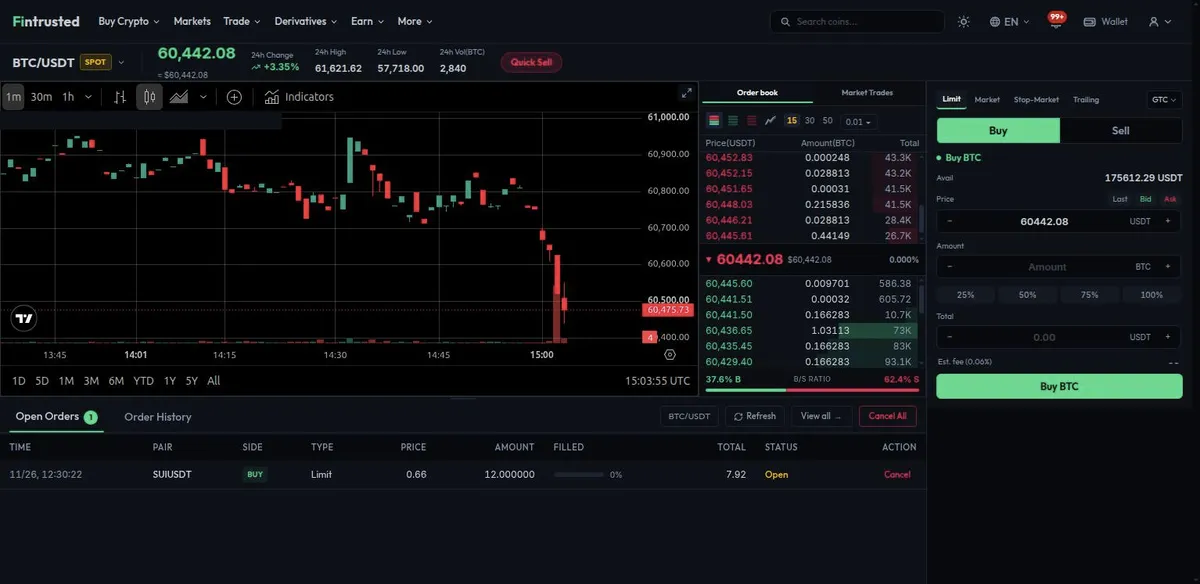
Diverse Trading Products
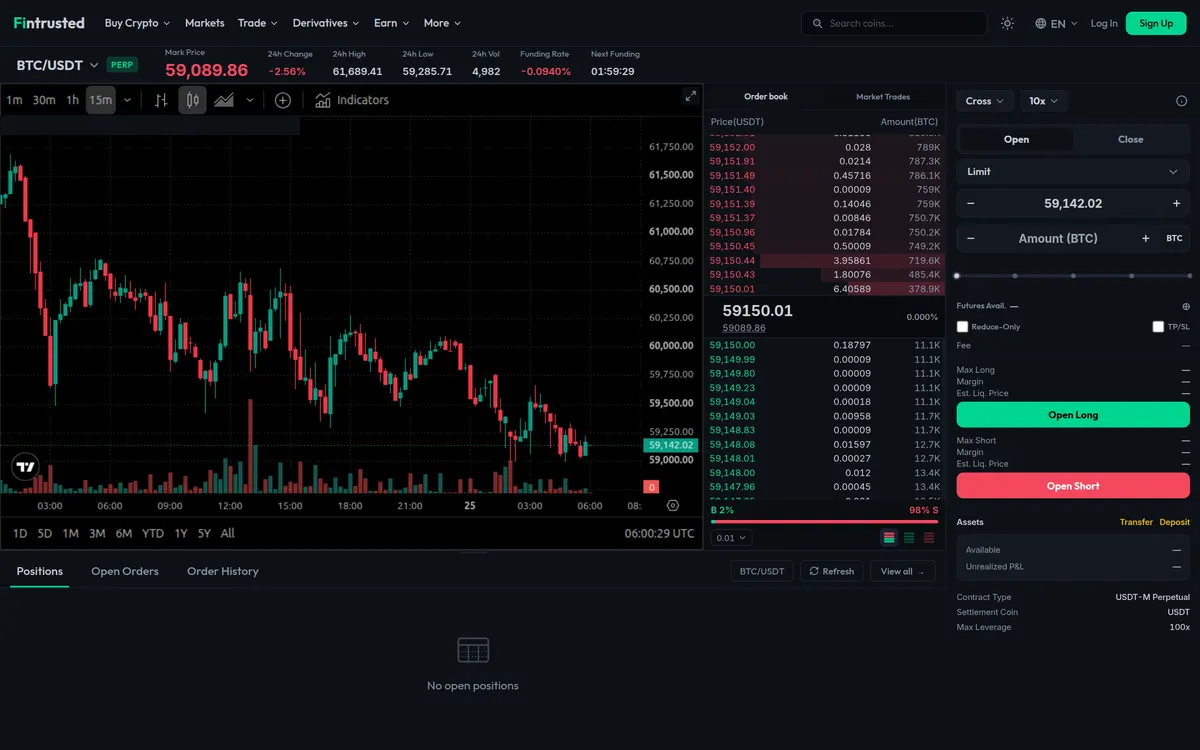
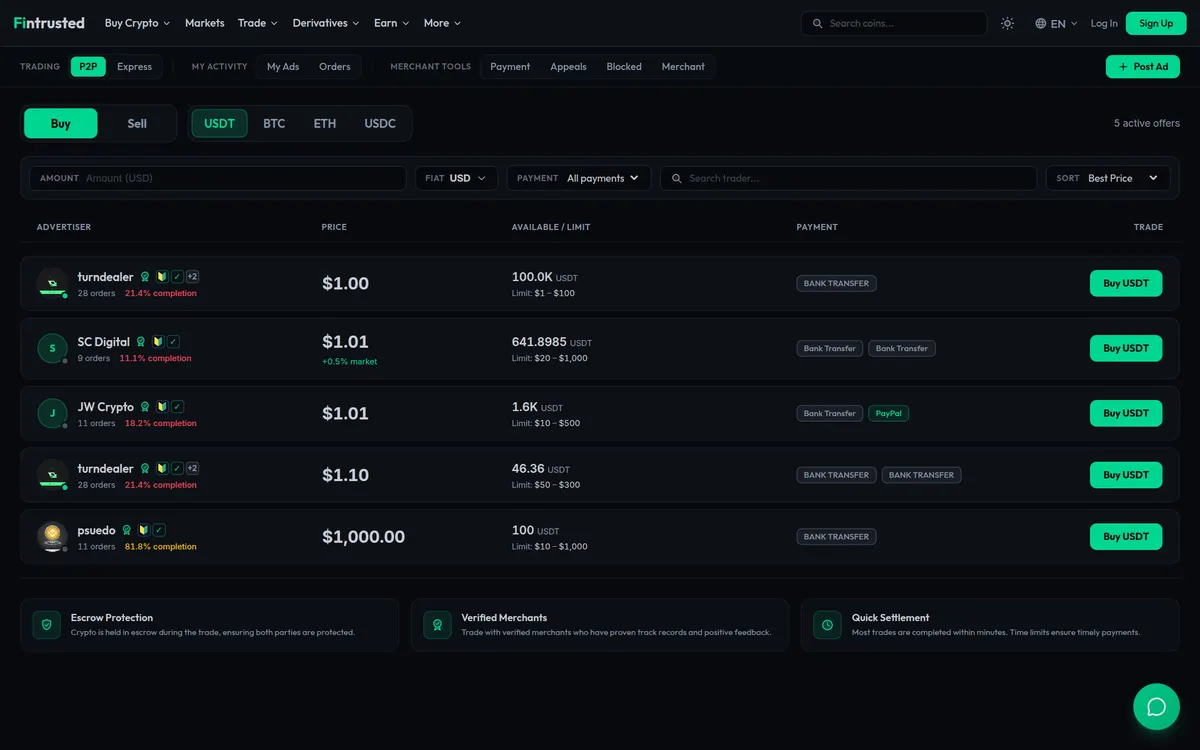
Capture revenue from all trader segments with spot, margin, futures, and P2P trading on a single, unified platform.
Attract more users with diverse products
Maximize revenue from multiple fee streams
Increase user engagement and retention
Professional trading experience
Complete White-Label Solution
Your brand, your rules. Full control over UI/UX, color schemes, and user flows without any technical development.
Build brand recognition and trust
Customizable user experience
No coding required
Your domain, your platform
Advanced Risk Management
Protect your platform and users with position limits, liquidation engines, insurance funds, and real-time monitoring.
Minimize platform risk exposure
Automated liquidation protection
Real-time risk monitoring
Circuit breakers for volatility
Built-in Compliance Suite
Stay ahead of regulations with automated KYC/AML, Travel Rule compliance, sanctions screening, and jurisdiction controls.
Meet global regulatory requirements
Automated identity verification
Travel Rule compliance
Geo-controls and restrictions
High-Performance Infrastructure
Process millions of orders per second with sub-millisecond latency. Built to scale with your growing user base.
Handle peak trading volumes
Sub-millisecond order matching
Auto-scaling infrastructure
99.99% uptime
24/7 Operations & Support
Multi-region deployment, automatic failover, and dedicated technical support so your exchange runs smoothly.
Round-the-clock technical support
Multi-region redundancy
Automatic failover systems
Real-time performance monitoring
Perfect Solution For Growing Businesses
Whether you're a startup or established enterprise, our platform scales with your ambitions
Startups & Entrepreneurs
Launch quickly with minimal upfront investment. Perfect for first-time exchange operators with big visions.
Low initial investment
Fast time-to-market
Scalable infrastructure
Financial Institutions
Expand your service offerings with cryptocurrency trading while maintaining enterprise security standards.
Enterprise security
Regulatory compliance
Institutional features
Existing Exchanges
Upgrade your technology stack with our high-performance matching engine and advanced trading features.
Technology modernization
Performance improvement
Feature expansion
Deploy Your Custom Crypto Exchange Software in 14 Days
1
Strategy & Planning
We analyze your business model, target markets, and compliance requirements to create a custom implementation plan that aligns with your goals.
Days 1-3
2
Platform Customization
Configure trading pairs, fee structures, UI/UX, and integrate your brand identity across the entire platform experience.
Days 4-8
3
Testing & Compliance
Rigorous quality assurance, security audits, and regulatory compliance verification so everything works perfectly.
Days 9-12
4
Launch & Growth
Go live with dedicated technical support, real-time monitoring, and ongoing optimization to help scale your exchange business.
Days 13-14
Enterprise-Grade Security & Compliance
Built with institutional-grade security measures and global compliance standards
Bank-Grade Security
Protect user assets with institutional security measures
Multi-signature cold storage
MPC wallet technology
Complete insurance coverage
24/7 threat monitoring
DDoS protection
Global Compliance
Stay ahead of regulations with built-in compliance tools
Tiered KYC/AML verification
FATF Travel Rule support
Sanctions screening
Jurisdiction controls
Audit trail reporting
Operations & Monitoring
Manage your exchange with powerful operational tools
Real-time admin dashboard
full audit logs
Risk management tools
Advanced analytics & reporting
User management system
Deployment Assurance
If our team cannot deploy the licensed platform to your agreed infrastructure under the documented technical requirements, we will work with you at no additional cost until deployment is complete.
Pre-Integrated with Leading Providers
Connect to best-in-class services without development overhead
Codono's crypto exchange software operates as five interconnected systems — order matching, wallet management, identity verification, risk controls, and admin operations — all coordinated through a unified backend with full source code access.
The order matching engine processes buy and sell orders using price-time priority, supporting limit, market, stop-limit, OCO, fill-or-kill, and post-only order types. The multi-chain wallet system manages deposits and withdrawals across 50+ blockchains including Bitcoin, Ethereum, Solana, and Tron with hot/cold separation. The KYC/AML compliance layer integrates with Sumsub for tiered identity verification, and the admin panel gives operators full control over users, wallets, fees, trading pairs, and real-time reporting.
Full Source Code Included with Every License
Codono is licensed as crypto exchange source code, not a black-box SaaS. You receive the complete, unencrypted codebase — matching engine, wallet services, admin panel, mobile apps, and frontend — so your exchange keeps running regardless of vendor relationships.
Every operator gets readable, auditable source code for every component. Your engineering team can modify trading logic, add custom blockchains, integrate proprietary KYC providers, and adjust risk parameters without waiting on a vendor roadmap or paying per-customization fees. The platform deploys on infrastructure you control, with no license servers, callbacks, or obfuscation.
For developers and CTOs who want to evaluate the architecture first, the crypto exchange script page breaks down the stack, APIs, and deployment model in technical detail. For operators who prefer a turnkey launch with assisted deployment and compliance configuration, this page covers the business and operational side.
Every Module in the Box
This is the complete, shipping feature inventory — not a roadmap. Every item below is in the codebase you license.
Trading Products
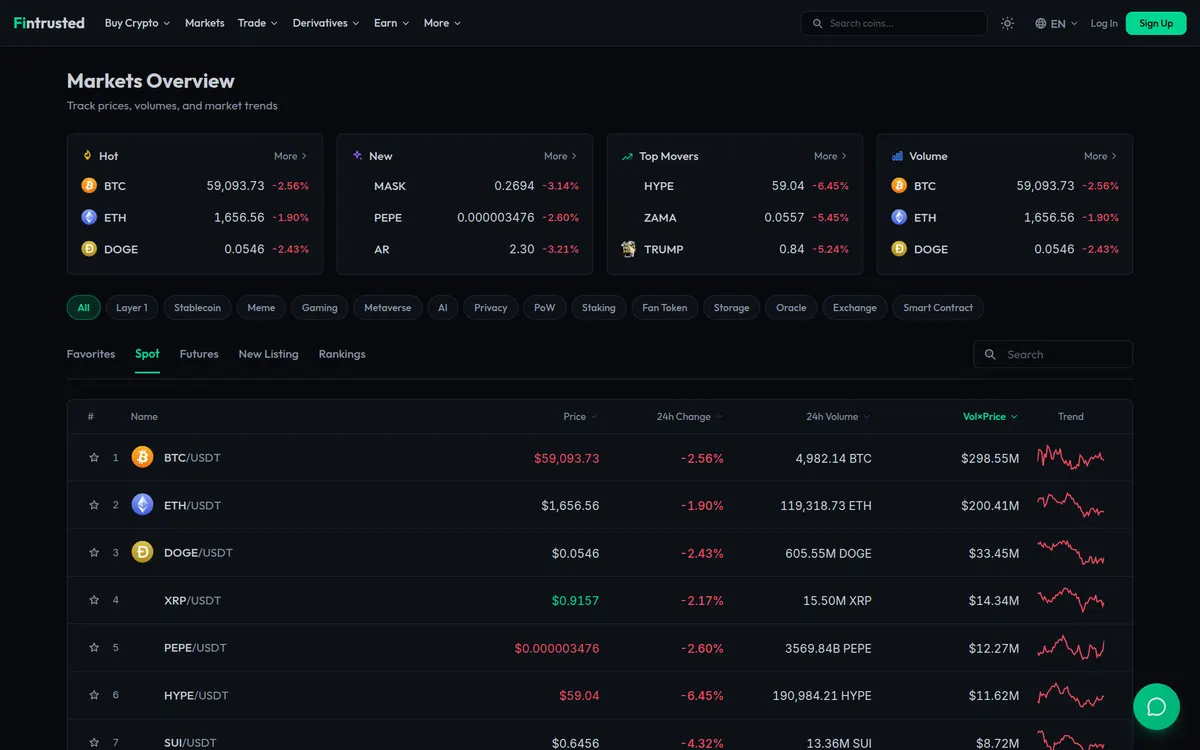
Spot Trading — Central limit order book with TradingView charts, limit/market/stop orders, time-in-force support, and configurable maker/taker fees with VIP tiers
Perpetual Futures — Funding rates, insurance fund, auto-deleveraging, and a mark-price oracle that medians multiple external venues so one bad print can't cascade liquidations — the core of a full derivatives exchange
Forex & CFD Trading — Multi-asset positions with live institutional price feeds, leverage, and equity protection
Options Trading — Timed binary options products with configurable expiries and fixed payouts (for licensed operators in permitted markets)
Tokenized Stock Trading — Stock futures and options order flow alongside crypto markets
P2P Marketplace — Escrowed fiat-to-crypto with merchant verification, security bonds, in-order chat, appeals/dispute resolution, and 100+ payment methods
Copy Trading — Leader profiles, follower allocation with exposure caps, and cross-market fan-out including forex
Trading Bots — Operator-controlled automated strategies with per-pair allowlists and price/amount validation
Instant Convert — One-click flash exchange between assets at guaranteed quotes
OTC Desk — Request-for-quote block trading with firm time-locked quotes, no order-book slippage, and escrowed settlement for your largest clients
Earn & Growth
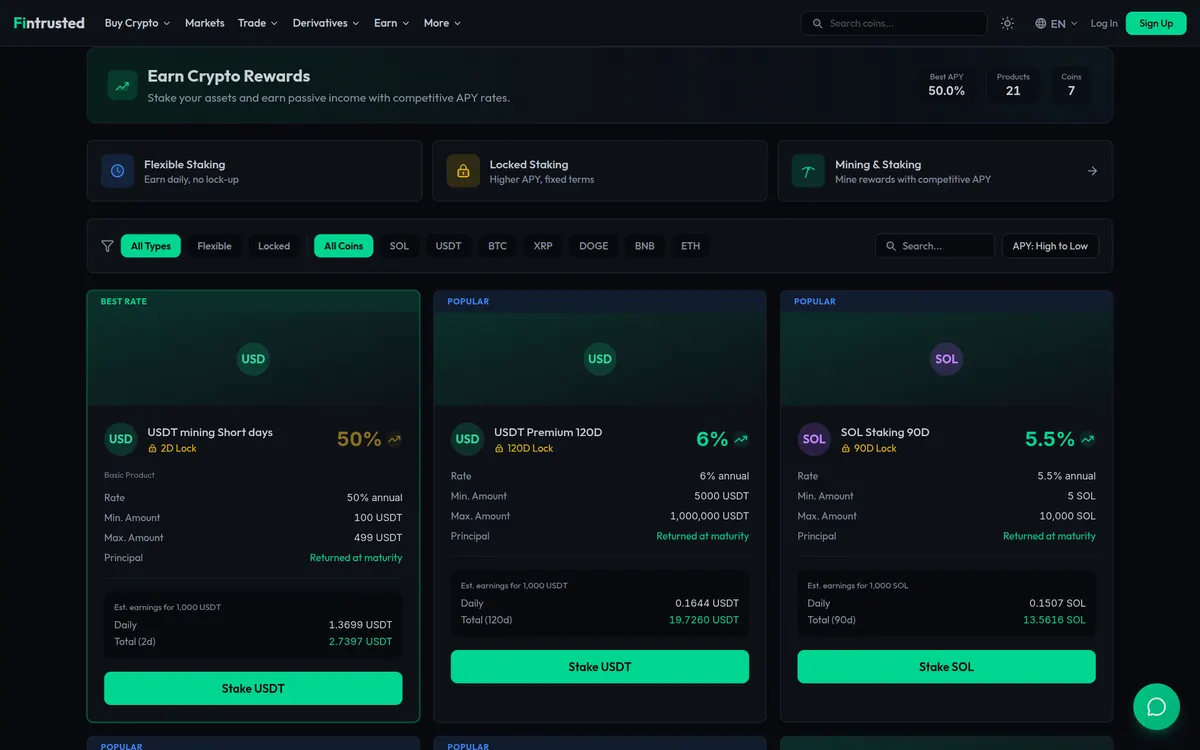
Staking & Earn — Flexible and fixed-term products, lock-mining pools, and cloud-mining contracts with scheduled reward distribution
Crypto Loans — Collateralized lending against exchange balances
Launchpad (IEO) — Token sales with subscription weighting, oversell protection, and automated settlement
Trading Competitions — Volume/PnL leaderboards with automated settlement and prize payouts
Rewards & Gift Cards — Points-based reward shop with token redemption, plus issuable gift cards with secret-key claiming
Custody & Wallets
Multi-Chain Wallets — Native deposit scanning, address derivation, and broadcast across Bitcoin, all EVM networks, Solana, Tron, TON, XRP, Litecoin, and more behind one driver abstraction
Threshold MPC Signing — Distributed key generation and threshold signatures so no single machine ever holds a complete private key
Hot/Cold Segregation — Working-float hot wallets, cold treasury, automated collection sweeps, and multi-approval withdrawal workflows
Withdrawal Protections — Address allowlisting, per-tier limits, emergency kill-switches, and maker-checker approval on outbound funds
Double-Entry Ledger — Every balance mutation recorded as balanced ledger entries with reconciliation monitoring
Telegram Trading Bot — Balance, orders, price alerts, copy trading, and staking from chat, plus account linking and notifications
Social Login — Google, Apple, MetaMask, and Telegram sign-in alongside email, with QR login for app-to-web handoff
Trading API — HMAC-authenticated REST endpoints and WebSocket market/account streams (API keys deliberately cannot withdraw)
Live Chat & Support — Built-in support ticketing and real-time chat with admin console
Localization — Multi-language user interface including RTL scripts, with per-locale content management
Compliance & Operations
Pluggable KYC/AML — Tiered verification with swappable providers, webhook-driven status, transaction monitoring, and jurisdiction controls
Admin Command Center — Role-based permissions on every action, maker-checker approvals for sensitive operations, balance adjustments with single-use confirmation tokens and immutable audit trails
Risk Controls — Exposure caps and insurance-floor gates on every position-opening path, per-user and per-IP rate limiting with an admin clearing console
Observability — Metrics endpoints, error tracking, business KPI dashboards, and withdrawal analytics
The built-in liquidity aggregation engine solves the cold-start problem — your users see competitive market depth from day one.
Unmatched orders route to external liquidity providers. As organic volume grows, more orders settle internally, increasing profitability. Launch with institutional-grade liquidity while building proprietary market-making relationships.
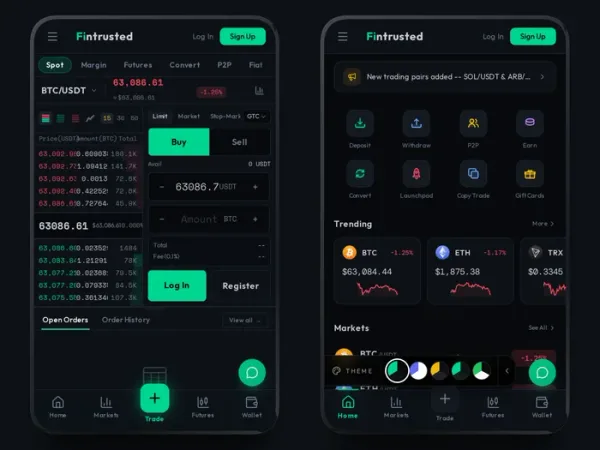
Over 70% of crypto volume comes from mobile — cross-platform apps with biometric auth, push notifications, and complete spot/futures/P2P access are included. Professional traders get documented API endpoints and WebSocket streams for market data and trade execution.
One-time Ultra license at $1,899 — full source code and mobile apps, no monthly charges, no revenue sharing — with Enterprise from $12,500 for custom deployment and dedicated support. Includes 12 months of updates and support. See pricing details.
Standard deployment takes 14 days — server provisioning (Days 1-3), branding and configuration (Days 4-8), testing and QA (Days 9-12), and production go-live (Days 13-14). Contact our deployment team for your timeline.
From License to Live Exchange: What Deployment Looks Like
Deploying Codono is not a DIY guessing game. Every license includes assisted deployment where our engineering team configures your server environment, connects blockchain nodes, sets up the matching engine, integrates your chosen KYC provider, applies your branding, and runs production readiness checks. The typical timeline from license purchase to live exchange is 14 days.
Days 1-3: Server provisioning on your chosen infrastructure (AWS, Hetzner, DigitalOcean, or bare metal), database setup, SSL configuration, domain pointing, and core platform deployment. Blockchain node connections for your target chains are established and synchronized.
Days 4-8: Trading pair configuration based on your market strategy, fee schedule setup, KYC provider integration with Sumsub or your preferred provider, liquidity source connections, fiat payment gateway integration, and branding customization including logo, color scheme, and email templates.
Days 9-12: Load testing under simulated market conditions, security hardening review, and complete QA across all trading flows.
Days 13-14: Production go-live, starting with a soft launch to a controlled user group to validate system behavior under real conditions.
After launch, your exchange runs independently on your infrastructure. You have full source-code access, control the servers, and keep 100% of trading revenue. Our 12-month support package covers security patches, blockchain compatibility updates, and technical assistance — but your exchange operates without any dependency on our systems.
Operational Economics: Running Your Exchange
The operational cost of running a Codono-powered exchange breaks down into infrastructure and staffing. Infrastructure costs typically range from $200-$800/month for cloud hosting, depending on your traffic and the number of blockchain nodes you run. A starter exchange serving 1,000-5,000 daily active users can run comfortably on $300/month of cloud infrastructure.
Staffing depends on your scale. Solo operators and small teams (1-3 people) handle most exchanges under 5,000 DAU using the admin dashboard for day-to-day operations. Growing exchanges with 5,000-50,000 DAU typically add dedicated customer support and compliance review staff. The platform automates trading operations, wallet management, and fee collection — your team focuses on users, compliance, and business development.
Revenue scales with volume. At $1M daily trading volume with standard 0.1% maker/0.2% taker fees, an exchange generates approximately $3,000/day in trading fees alone. Add margin interest, futures funding rates, withdrawal fees, and listing fees, and revenue per dollar of volume increases significantly. Most Codono operators reach profitability within 3-6 months of launch, depending on their market and user acquisition strategy.
Under the Hood: Architecture That Survives Volatile Markets
This section describes the Enterprise edition. The Ultra edition is a separate PHP and Vue.js codebase; see the technology stack below.
What separates production-grade crypto exchange software from a clone script shows up on the worst day, not the best. The architecture decisions below are the ones that matter when a market moves 20% in an hour and every user hits the platform at once — the conditions that expose whether infrastructure is production-grade or demonstration-ready. (If you're modeling your launch on a specific exchange, the same engine powers our crypto exchange clone scripts — Binance, KuCoin, Bybit and more.)
Matching engine. Orders match in memory using price-time priority, with every state change journaled for recovery. The engine supports the full order-type set professional traders expect — limit, market, stop-limit, OCO, fill-or-kill, immediate-or-cancel, and post-only — with per-pair precision configuration so small-cap listings don't inherit BTC's decimal assumptions. Fee calculation happens at match time with maker/taker differentiation and VIP-tier discounts applied server-side.
Wallet layer. Each supported chain runs behind a unified driver abstraction: deposit scanning, address derivation, transaction building, and broadcast are chain-specific implementations behind one interface. That is how the platform covers 50+ networks — Bitcoin-family UTXO chains, every EVM network, Solana, Tron, TON, XRP — without the wallet code metastasizing. Hot wallets hold working float; cold storage holds the treasury; withdrawal flows enforce configurable approval thresholds and multi-signature policies between them.
Risk controls. Margin and futures positions are monitored continuously against mark prices aggregated from multiple external venues — a median across sources, so a single venue's bad print can't trigger cascade liquidations. Insurance funds absorb liquidation shortfalls, and exposure caps gate every position-opening path, including API orders.
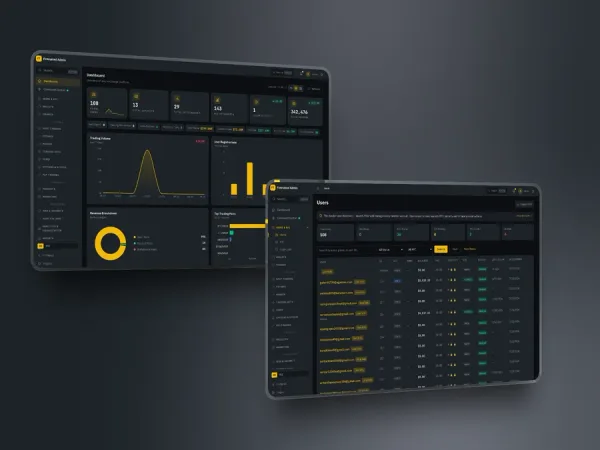
Operations. The admin panel is the operator's cockpit: user management with KYC review queues, wallet oversight with balance reconciliation views, fee and pair configuration, withdrawal approval workflows, and immutable audit logs on every administrative action. Double-entry ledger records back every balance mutation, which is what your auditor — and your own 3 a.m. debugging session — will thank you for.
Operator Control Center
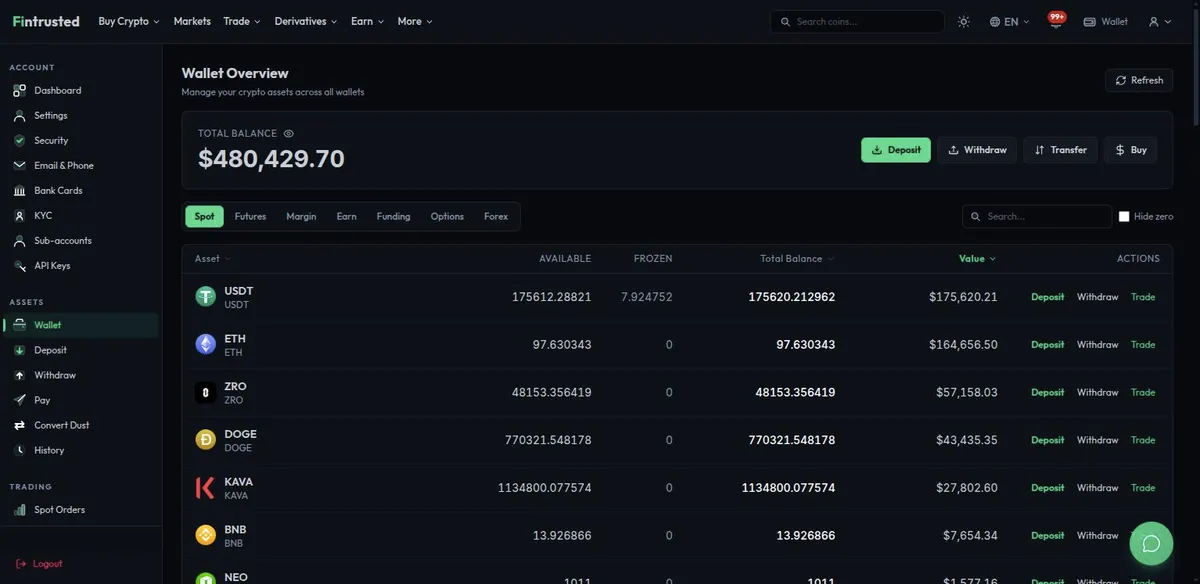
Manage users, review KYC queues, reconcile wallet balances, configure trading pairs, and approve withdrawals from one dashboard. Every action is logged immutably for audit and compliance.
Technical evaluators can go deeper: the crypto exchange script page covers the codebase from a developer's perspective, and the API reference documents the REST and WebSocket surface.
Technology Stack
Boring, proven infrastructure by design. Every layer is a technology your team can hire for, that has survived a decade of production finance workloads, and that carries no per-seat vendor licensing:
This is the Enterprise edition's stack. The Ultra edition ($1,899) runs a PHP backend with MySQL, Redis and TimescaleDB and a Vue.js frontend. The pricing page lists both stacks side by side.
Clients
Web trading UI
Operator admin panel
iOS and Android apps
REST and WebSocket API
Services
User
Trading
Market data
Admin
Engines
Matching engine (Java)
Real-time market data (Node.js)
Custody signer (Go, threshold MPC)
Data
MySQL
Redis
Kafka
ClickHouse
MongoDB
Requests flow down from the clients; each layer below scales on its own. The table lists what each technology is there for.
Layer
Technology
Why it's there
Backend services
Java · Spring Boot / Spring Cloud microservices
Independent user, trading, market-data, and admin services with service discovery — scale and deploy each separately
Matching engine
Java
Dedicated order-matching service: price-time priority, with a per-symbol write-ahead log and snapshots for crash recovery
Real-time market data
Node.js · TypeScript
WebSocket fan-out of prices, depth, and feeds, kept separate from the trading path
Primary datastore
MySQL
Balances, orders, and the double-entry ledger — ACID where money lives
Cache & coordination
Redis
Sessions, distributed locks, rate limits, kill-switches, hot market data
Event streaming
Kafka
Order events, notifications, and cross-service messaging without tight coupling
Time-series & chat
ClickHouse · MongoDB
OHLCV candle history at scale; live chat and high-churn documents
Web frontends
Next.js (React) · TypeScript · Tailwind
Responsive trading UI and a separate operator admin panel
Mobile
React Native
Cross-Platform iOS/Android apps from one codebase, push notifications included
Custody signer
Go · threshold MPC
Isolated signing service — key shares never assemble on one machine
Charting
TradingView
The charting professional traders already know
Infrastructure
Linux · Nginx
Runs on any cloud or bare metal you control — no proprietary runtime
The stack decomposes into independent services, so a busy exchange scales the matching path without touching the user service, and your team can modify any layer — it's all in the source you license.
How Codono Compares to Other Crypto Exchange Software
Most buyers evaluating crypto exchange software shortlist the same handful of vendors: Codono, HollaEx, AlphaPoint, and OpenDAX, plus development agencies selling clone scripts. The platforms differ less in feature checklists than in three structural decisions that shape everything downstream: who owns the code, how you pay, and what ships in the box.
Ownership. Codono licenses ship 100% unencrypted source code — matching engine, wallets, admin, and mobile apps — with no license servers or callbacks. HollaEx open-sources its core kit but keeps advanced functionality in paid cloud plans. AlphaPoint is closed SaaS: capable enterprise infrastructure, but you never see the code, and leaving means rebuilding. OpenDAX's community edition is open but requires substantial engineering investment to reach production readiness.
Cost structure. A one-time license changes exchange economics. SaaS platforms charge monthly platform fees that scale with your success, and some enterprise contracts include revenue sharing. Over five years, a mid-size exchange pays roughly $60,000 in total cost on Codono versus $150,000+ on cloud-hosted alternatives and $450,000+ on enterprise SaaS — the full TCO breakdown itemizes these estimates.
Included scope. Spot trading is table stakes; the differences appear in the second module. Margin, perpetual futures, P2P fiat markets, staking, launchpad, and cross-platform iOS/Android apps are included in every Codono license. On most alternatives these are paid add-ons, PWA substitutes, or simply absent — meaning the "cheaper" platform often costs more by the time it matches the launch scope you actually planned.
This page covers the platform itself. If your question is about the branding model — your name, domain, and apps on this same codebase — see white label crypto exchange software; for regulated institutions with custom deployment needs, see the enterprise tier.
How to Evaluate Crypto Exchange Software: A Buyer's Checklist
After hundreds of operator conversations, the same evaluation mistakes come up repeatedly. Use this checklist before committing to any vendor — including us.
1. Demand a live demo, not screenshots. Trade on the demo. Place a limit order, cancel it, check the fee math, test a withdrawal flow. Exchange software fails in the details — order-book behavior under load, decimal precision on small-cap pairs, withdrawal confirmation UX. A vendor who won't give you a full-access demo is telling you something.
2. Verify source-code claims precisely. "Open source", "source available", and "full source code" mean different things. Ask: is any component encrypted or obfuscated? Does the platform call home? What happens to your exchange if the vendor disappears? Get the answer in the contract, not the sales call.
3. Model five-year cost, not sticker price. Add monthly platform fees, revenue share, hosting, KYC provider fees, mobile app development if not included, and the developer time needed to reach production. Open-source kits with $0 license fees routinely cost more than commercial licenses once engineering salaries are counted.
4. Check module depth, not module names. "Futures" can mean full perpetual contracts with funding rates, insurance funds, and liquidation engines — or a thin CFD wrapper. "P2P" can mean escrowed fiat marketplaces with dispute resolution — or a message board. Ask how each module handles the failure cases: liquidation cascades, payment disputes, stuck withdrawals.
5. Test support before you buy. Send a technical pre-sales question and measure response time and answer quality. Support quality during the sales process is the ceiling, not the floor, of what you'll get after payment.
Independent feedback from licensed operators and founders running live exchanges on Codono.
Licensed Codono last year. Hot and cold wallet setup gave me peace of mind. Matching engine handles volume well. I run a small exchange with about 5000 active users. No hidden fees after purchase. Support replies within a day. Does what it says.
Ran a demo first then bought. Live for five months now. Trading engine is fast. My users haven't complained about lag. One time payment means I keep all the revenue. Support responds on Telegram quickly.
I run a small crypto exchange in Europe. Codono handles margin trading and P2P without crashing. Used their documentation to customize the UI. No hidden costs. Support helped me migrate to a bigger server. Solid product.
Crypto Exchange Software FAQ
Common questions about crypto exchange software — features, pricing, source code, and deployment
Crypto exchange software is a ready-made technology platform that lets you launch and operate a cryptocurrency trading business. It includes a matching engine, multi-chain wallet system, trading interface, admin dashboard, KYC/AML compliance tools, and API layer — everything required to run a fully functional exchange without building from scratch.
Codono starts at $1,899 as a one-time license fee with no recurring platform charges. This includes full source code, spot trading, 50+ blockchain integrations, mobile apps, and an admin panel. Higher tiers add margin trading, futures, P2P, and staking modules. See our pricing page for a detailed breakdown.
A production-grade platform should include: an in-memory matching engine, multi-chain wallet with hot/cold storage, spot and derivatives trading, KYC/AML compliance, REST and WebSocket APIs, a mobile trading app, an admin dashboard, and a liquidity engine. Codono includes all of these out of the box with full source code.
Yes. Codono provides 100% unencrypted source code with every license. You can audit, modify, and extend every module — the matching engine, wallet layer, API, frontend, and admin panel. Full source code means no vendor lock-in: your developers can customize the platform and you keep running even if you switch providers.
Most operators go live in 14 days with assisted deployment: server provisioning, branding and configuration, testing, then production go-live. The platform is production-ready out of the box. Regulatory licensing and banking run on their own schedule and usually decide your public launch date.
Yes. The platform includes built-in KYC/AML verification via Sumsub, Travel Rule support, sanctions screening, tiered verification levels, and jurisdiction-based geo-controls. These features help operators meet requirements under MiCA (EU), VARA (Dubai), MAS (Singapore), and other frameworks. The compliance module is configurable per jurisdiction.
Codono supports 50+ blockchains including Bitcoin, Ethereum (and all ERC-20 tokens), Solana (SPL tokens), Tron (TRC-20), BNB Chain (BEP-20), Polygon, Avalanche, TON, and all major EVM-compatible networks. New chains are added through a unified wallet abstraction layer without modifying core exchange code.
They refer to the same product. 'Crypto exchange software' emphasizes the full platform — matching engine, wallets, trading UI, compliance tools, and admin panel. 'Crypto exchange script' emphasizes the source code and developer angle — a codebase you can deploy, modify, and extend. Codono provides both: a complete platform with full unencrypted source code.
Yes. Codono is self-hosted by design — you deploy on your own infrastructure (AWS, Hetzner, DigitalOcean, or bare metal) and control the servers, the database, and the keys. There are no license servers, callbacks, or vendor dependencies at runtime. A production deployment typically runs on $200-$800/month of cloud infrastructure depending on traffic and the number of blockchain nodes.
The built-in liquidity engine aggregates order flow from external providers, so your order books show competitive depth from launch. Unmatched orders route externally; as organic volume grows, more trades settle internally and your fee capture increases. You can also run your own market-making accounts through the standard trading API.
Everything user-facing: logo, color scheme, domain, email templates, mobile app branding, landing pages, fee schedules, trading pairs, and KYC tiers. Because you receive full source code, deeper changes — new order types, custom modules, third-party integrations — are also possible without vendor involvement.
Your exchange keeps running — the license is perpetual and the software has no time locks or phone-home checks. You can renew the support package for continued security patches, blockchain compatibility updates, and technical assistance, or maintain the codebase with your own team using the included documentation.
Yes. New trading pairs and tokens are added from the admin panel without code changes — including your own ERC-20, BEP-20, TRC-20, or SPL token. You control listing rules, fees, and market visibility, and can charge listing fees to third-party projects as a revenue stream.
In most jurisdictions, yes — requirements range from MSB registration (US) to VASP/MiCA authorization (EU), VARA (Dubai), or equivalent frameworks. Codono provides the compliance infrastructure (KYC tiers, transaction monitoring, audit logs, reporting) but licensing is your responsibility. Many operators launch in a favorable jurisdiction first and expand as licenses are granted.
The short version: Codono is a one-time license with full source code and the widest module set (spot, margin, futures, P2P, staking, launchpad, mobile apps). HollaEx pairs an open-source kit with recurring cloud plans; AlphaPoint is enterprise SaaS without source access. See our detailed Codono vs HollaEx and Codono vs AlphaPoint comparisons for feature matrices and five-year cost breakdowns.
 Crypto Exchange Software
 White Label Crypto Exchange
 P2P Crypto Exchange
 Crypto Futures Trading
 Token Launchpad
 Margin Trading
 Liquidity Engine
 Crypto Wallet
 KYC & AML
 Exchange Security
 Crypto Staking Software
 Crypto Lending Software
 Crypto Earn Module
 Exchange Integrations