 Software de Exchange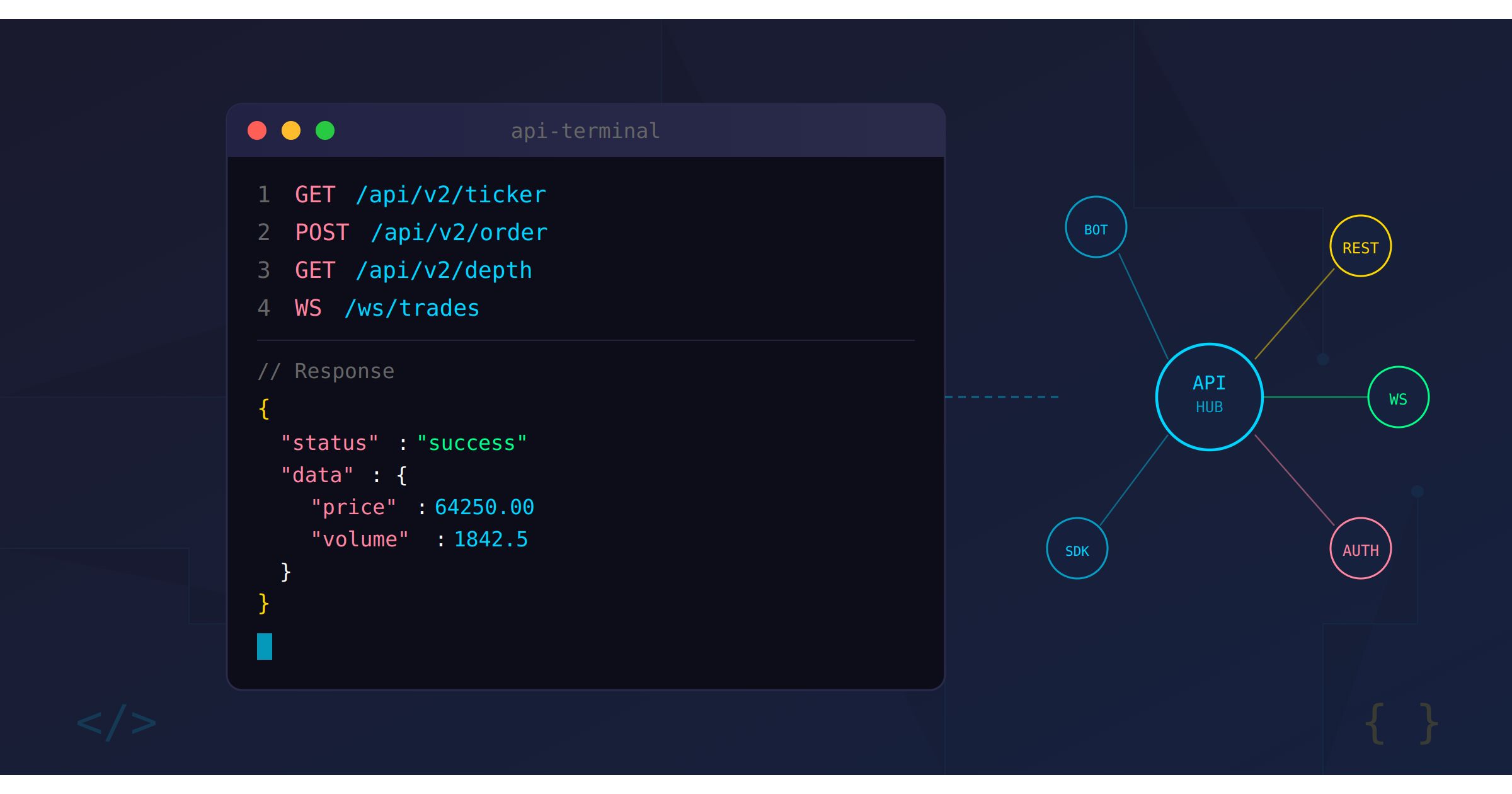
Crypto Exchange Technology Stack: What Powers a Modern Trading Platform
Table of Contents
- You Cannot Evaluate Exchange Software Without Understanding Its Stack
- Layer 1: The Matching Engine
- Layer 2: The Database Layer
- Layer 3: The API Layer
- Layer 4: The Wallet and Blockchain Layer
- Layer 5: The Frontend
- Layer 6: Security Infrastructure
- Layer 7: DevOps and Deployment
- Evaluating a Vendor’s Tech Stack: The Practical Checklist
- The Stack Behind Codono
- The Technology Decision Is a Business Decision
You Cannot Evaluate Exchange Software Without Understanding Its Stack
I have watched dozens of exchange founders make the same mistake. They evaluate crypto exchange software based on the frontend — the trading charts, the color scheme, how the admin panel looks in a demo. Then three months post-launch, they discover the database cannot handle their growing user base, the wallet integration is hardcoded to two chains, or the matching engine chokes at 500 concurrent orders.
The technology stack determines everything that matters after launch day: how fast your exchange processes trades, how many users it supports before infrastructure costs spiral, how quickly your team can add new tokens or trading pairs, and how safe user funds actually are.
This is not a guide about what languages are “best” in some abstract sense. It is a practical breakdown of what each layer of the stack does, why the choices matter commercially, and what questions to ask vendors before signing anything.
Layer 1: The Matching Engine
The matching engine is the core of any exchange. Every buy order, every sell order, every limit, market, and stop order flows through this component. If it fails, your exchange is offline. If it is slow, traders leave.
What the matching engine actually does
It maintains an order book for every trading pair. When a new order arrives, the engine checks whether it can be matched against existing orders at a compatible price. If yes, a trade executes. If no, the order sits in the book waiting.
The critical performance metric is throughput — how many orders the engine can process per second. A new exchange with 200 users needs maybe 100 orders per second. A growing exchange with 50,000 active traders needs 10,000 or more. An exchange targeting institutional algo traders needs 100,000-plus.
What separates good from bad matching engine implementations
In-memory processing. The matching engine should keep the entire order book in RAM, not query a database for every match. Database-backed matching engines are a red flag — they cap out at a few hundred operations per second regardless of hardware.
Event-driven architecture. The engine should emit events (trade executed, order placed, order cancelled) that other systems consume asynchronously. If the matching engine waits for the database to confirm a write before processing the next order, latency compounds fast.
Deterministic matching. Price-time priority is the standard: at the same price, earlier orders fill first. Any engine that deviates from this without clear documentation is a risk.
Codono’s spot trading engine uses in-memory order book management with event-driven trade settlement, which is why it handles institutional-grade throughput without custom infrastructure.
Questions to ask a vendor about the matching engine
- What is the maximum tested throughput in orders per second?
- Is matching done in-memory or does it rely on database queries?
- Does it support multiple order types natively, or are stop orders simulated at the application layer?
- What happens during a matching engine restart — are order books persisted and recovered?
Layer 2: The Database Layer
The database stores everything except what lives in the matching engine’s memory: user accounts, trade history, wallet balances, KYC documents, configuration, and audit logs.
Relational vs. NoSQL: The real tradeoff
Most production exchanges use a relational database (MySQL or PostgreSQL) for core transactional data. The reason is simple: financial data requires ACID compliance. When a trade executes and two balances update, both updates must succeed or both must fail. Relational databases guarantee this. Most NoSQL databases do not.
Where NoSQL fits: time-series data (candlestick charts, tick data), caching layers (Redis for session management and real-time order book snapshots), and search indexes (Elasticsearch for transaction filtering).
What the database architecture tells you about the software
Single database instance. This works for a new exchange with a few thousand users. It will not work at scale. Ask the vendor what happens when you have 100,000 users and 10 million trade records. If the answer involves “upgrading to a bigger server,” that is not a scaling strategy.
Read replicas. Good exchange software separates read-heavy operations (displaying order books, user dashboards, trade history) from writes (executing trades, processing deposits). Read replicas handle the former without loading the primary database.
Database sharding or partitioning. For large-scale exchanges, the ability to partition data (for example, by trading pair or by date) prevents any single database from becoming a bottleneck. This is an architecture decision baked into the software — not something you bolt on later.
The Redis question
Nearly every modern exchange uses Redis for at least three things: caching real-time market data (tickers, order book snapshots), managing user sessions, and rate limiting API requests. If a vendor’s architecture has no caching layer, expect performance problems under moderate load.
Layer 3: The API Layer
The API is how the frontend talks to the backend, how mobile apps connect, and how algorithmic traders interact with your exchange. We covered API requirements in detail in our API trading guide, but from a technology stack perspective:
REST API for synchronous operations
Account management, order history, balance queries — these use REST endpoints. The technology choice (Node.js, Go, PHP, Python) matters less than the architecture. Key indicators of a well-built REST API:
- Versioned endpoints (v1, v2) so updates don’t break existing integrations
- Consistent response format across all endpoints
- Proper HTTP status codes (not everything returning 200 with an error in the body)
- Rate limiting middleware that protects the system without penalizing legitimate users
WebSocket for real-time data
Order book updates, live trades, price tickers, and user-specific notifications (order fills, balance changes) need WebSocket streams. Polling a REST API for real-time data is a scaling disaster.
The WebSocket implementation quality directly affects perceived exchange speed. A well-implemented WebSocket delivers order book updates within 50 milliseconds of a trade. A poorly implemented one batches updates every second or two — noticeable to any active trader.
The language question
Exchange operators frequently ask which programming language the backend uses, often with strong opinions about PHP vs. Node.js vs. Go. The honest answer: the language matters far less than the architecture. A well-architected PHP application with proper caching, queue workers, and read replicas will outperform a poorly architected Go application every time.
That said, some general patterns hold:
- PHP (Laravel, Custom MVC) — large ecosystem, massive talent pool, well-suited for business logic and admin panels. Most white-label exchanges run PHP backends because the development speed and available workforce are unmatched.
- Node.js — strong for WebSocket-heavy applications and real-time event processing. Often used for the API gateway and WebSocket server even when the core backend is PHP or Go.
- Go — excellent for the matching engine specifically. Go’s goroutines handle concurrent order processing efficiently with minimal overhead.
- Python — rarely the primary backend language for exchanges, but commonly used for data processing, backtesting tools, and trading bot SDKs.
The best exchange architectures use multiple languages where each excels, rather than forcing one language into every role.
Layer 4: The Wallet and Blockchain Layer
The wallet system connects your exchange to blockchain networks. Every deposit, withdrawal, and balance depends on this layer functioning correctly. Failure here means lost funds — the kind of incident that ends exchange businesses.
Hot wallet vs. cold wallet architecture
Every exchange needs both. Hot wallets hold enough cryptocurrency for immediate withdrawal processing — typically 5-10% of total assets. Cold wallets hold the rest offline, protected from any network-based attack.
The technology stack question: how does the software manage the boundary between hot and cold?
Good implementations have automated threshold monitoring. When the hot wallet for ETH drops below a configured amount, the system alerts operators to initiate a cold-to-hot transfer. When deposits push the hot wallet above a maximum, excess is automatically swept to cold storage. The wallet infrastructure handles these thresholds and sweeps programmatically.
Multi-chain support and abstraction
Supporting Bitcoin, Ethereum, Tron, Solana, and BNB Chain means integrating five fundamentally different blockchain architectures. The wallet layer needs to abstract these differences so the rest of the application works with a consistent interface regardless of chain.
What to evaluate:
- Can new blockchain networks be added without modifying core exchange code?
- Does the system support token standards (ERC-20, BEP-20, TRC-20, SPL) or only native coins?
- How are deposit confirmations handled per chain? (Bitcoin needs 3-6, Ethereum needs 12, Solana is near-instant)
- Is there a unified API for checking balances and initiating withdrawals across all chains?
Codono supports 50+ blockchains including Ethereum, Bitcoin, Solana, Tron, BNB Chain, and all EVM-compatible networks through a unified wallet abstraction layer.
The node question
Running blockchain nodes is operationally expensive. A full Ethereum archive node requires 12+ terabytes of storage. A Bitcoin full node needs 500+ gigabytes. Solana validator nodes need high-memory machines.
Exchange operators have three options:
- Self-hosted nodes — full control, highest security, significant DevOps overhead
- Third-party node providers (Alchemy, Infura, QuickNode) — lower operational burden, dependency on a third party
- Hybrid — self-hosted for critical chains (BTC, ETH), third-party for lower-volume chains
The exchange software should support all three approaches. Lock-in to a specific node provider is a commercial risk.
Layer 5: The Frontend
The frontend is what users actually see and interact with. For crypto exchanges, this typically means three separate applications:
Web trading platform
Built with modern JavaScript frameworks (React, Vue.js, or Angular). The critical performance requirement: the trading interface must update in real-time without perceptible lag. That means efficient WebSocket handling, virtual DOM updates that don’t re-render unnecessarily, and lazy loading for components users don’t immediately need.
TradingView chart integration is standard for professional trading interfaces. The library is heavy — implementation quality determines whether it loads in 1 second or 5.
Mobile applications
Native apps (Swift for iOS, Kotlin for Android) provide the best performance and access to platform features like biometric authentication and push notifications. Cross-platform frameworks (React Native, Flutter) reduce development cost but sacrifice some native performance.
The mobile trading app needs to handle the same real-time data flows as the web platform — live prices, order book updates, push notifications for fills — on devices with less processing power and potentially unreliable network connections.
Admin panel
The least glamorous but operationally most important frontend. The exchange admin panel is where exchange operators manage users, review KYC applications, configure trading pairs, monitor system health, and respond to support requests. An underpowered admin panel means manual work that should be automated.
Layer 6: Security Infrastructure
Security is not a single component — it is a concern that crosses every layer of the stack. But certain security-specific infrastructure deserves attention:
Encryption
- At rest: Database encryption, wallet key encryption, KYC document encryption
- In transit: TLS 1.3 for all connections, WSS for WebSocket streams
- Application level: API key secrets hashed, not stored in plaintext. Passwords using bcrypt or Argon2, not MD5 or SHA-256.
Authentication and authorization
Two-factor authentication (TOTP-based, not SMS — SMS is vulnerable to SIM swapping) is the minimum. The security module should also support:
- IP whitelisting per API key
- Device fingerprinting and new-device alerts
- Anti-phishing codes in emails
- Withdrawal address whitelisting with time-locked changes
Monitoring and alerting
Real-time monitoring of: abnormal withdrawal patterns, large deposits from new accounts, order book manipulation attempts, and API rate limit violations. These aren’t optional security enhancements — they’re operational necessities that prevent losses.
Layer 7: DevOps and Deployment
The technology stack extends beyond code to how the software is deployed, monitored, and maintained.
Containerization
Modern exchange software should run in containers (Docker) orchestrated by Kubernetes or similar. This enables horizontal scaling (add more matching engine instances during high-volume periods), zero-downtime deployments, and consistent environments across development, staging, and production.
If the vendor’s deployment guide involves “upload files via FTP and restart Apache,” that tells you everything about their architecture generation.
Monitoring stack
Prometheus + Grafana for infrastructure metrics. Application-level logging with ELK stack (Elasticsearch, Logstash, Kibana) or equivalent. Custom dashboards for exchange-specific metrics: matching engine latency, order throughput, wallet balance thresholds, deposit processing times.
Backup and disaster recovery
Database backups are table stakes. The harder question: what is the Recovery Time Objective (RTO)? If your primary database fails, how quickly can you switch to a replica and resume operations? For an exchange, every minute of downtime is lost revenue and lost trust.
Evaluating a Vendor’s Tech Stack: The Practical Checklist
When you’re comparing crypto exchange software vendors, here’s what to ask:
| Component | Key Question | Red Flag Answer |
|---|---|---|
| Matching Engine | What’s the tested throughput? | ”It depends on your server” |
| Database | How do you handle read scaling? | ”Just get a bigger database server” |
| API | Do you support WebSocket streams? | ”We have REST API only” |
| Wallet | Can I add new blockchains myself? | ”We add new chains in our next release” |
| Frontend | Is it a SPA or server-rendered? | ”It’s rendered by PHP on each request” |
| Security | How are wallet keys stored? | Vague or evasive answer |
| Deployment | How do I deploy updates? | ”FTP upload” or “manual server access” |
The Stack Behind Codono
For transparency, here is what powers Codono’s exchange platform:
- Matching Engine: Node.js/TypeScript in-memory order book with write-ahead journaling
- Backend: Java (Spring) microservices for business logic and admin, with Kafka event streaming between services
- Database: MySQL with read replicas and Redis caching layer
- Wallet: Unified blockchain abstraction layer supporting 50+ chains, configurable hot/cold thresholds
- Frontend: Next.js (React) trading platform with TradingView integration, native React Native mobile apps
- Security: AES-256 encryption at rest, TLS 1.3 in transit, TOTP-based 2FA, multi-signature wallet support
- Deployment: Docker containers, full source code so you control your own infrastructure
Full source code means your team can audit every layer of this stack. No black boxes. No vendor lock-in.
The Technology Decision Is a Business Decision
The technology stack behind your exchange determines your operational costs, your scaling ceiling, your security posture, and your speed to market. Choosing exchange software without understanding its architecture is like buying a car based on the paint color.
Take the time to evaluate the stack. Ask the hard questions. Look at the code if you can. Your future self — dealing with scale, with compliance audits, with institutional due diligence — will thank you.
Ready to evaluate Codono’s technology stack firsthand? Request a demo and we will walk you through every layer. Or check out our pricing to get started.
The Codono Team has been building exchange infrastructure since 2017. We have seen what works at scale and what doesn’t — across 250+ deployments in 30+ countries.
Codono Team
Codono builds enterprise-grade crypto exchange software deployed by 250+ operators across 30+ countries. Our team writes from production experience running spot, derivatives, custody, and compliance at scale.
View all posts by Codono Team →