 Exchange-Software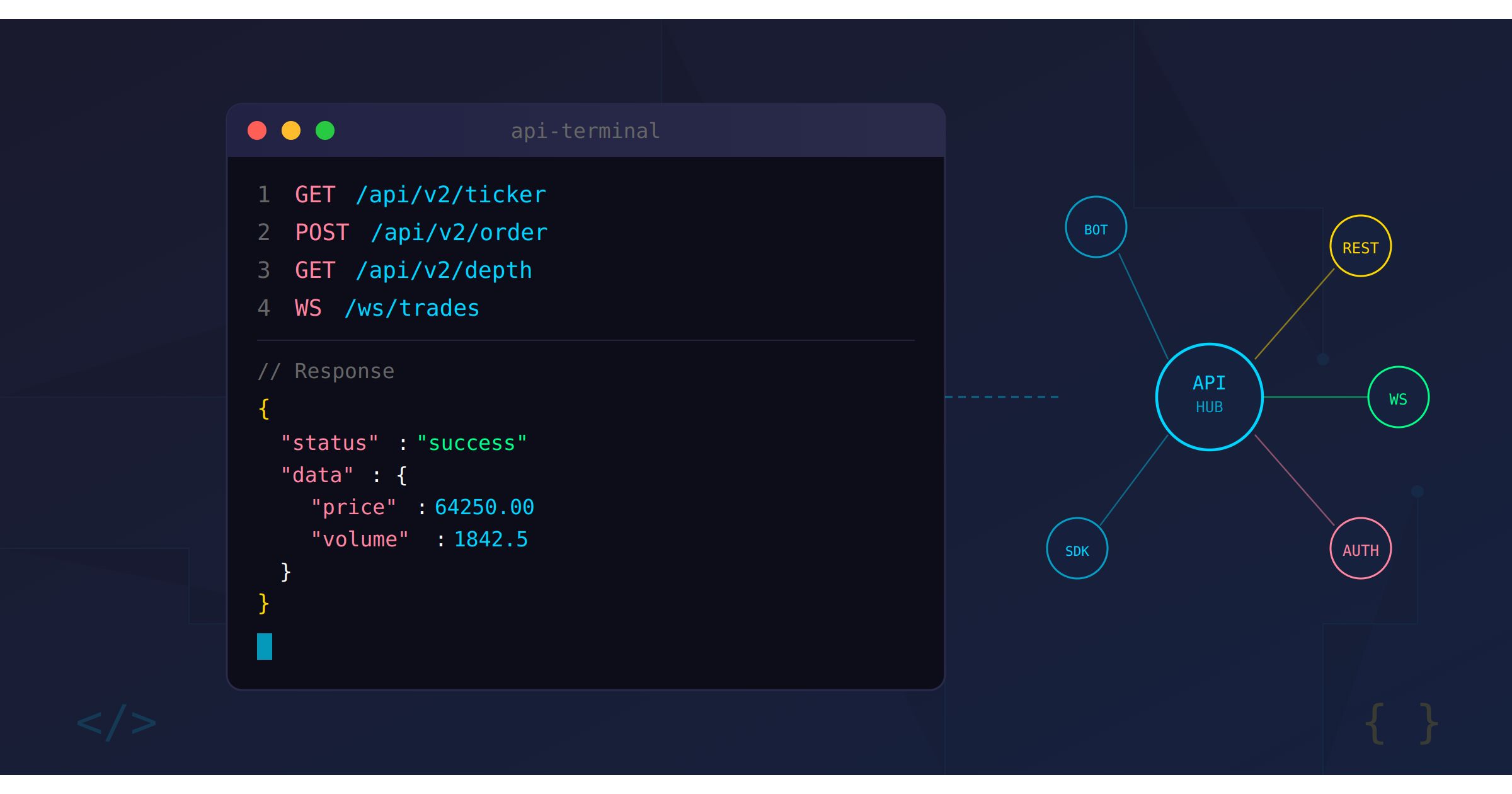
Crypto Exchange API Trading: Building for Algorithmic Traders
Table of Contents
- The 5% That Generate 80% of Your Volume
- The Three Types of API Traders (And What Each Needs)
- Essential API Architecture for Crypto Exchanges
- Rate Limiting: The Most Contentious Topic in Exchange APIs
- API Documentation: Your Secret Weapon
- Common API Mistakes That Drive Traders Away
- Building API Trader Acquisition Into Your Strategy
- The API Economy: Revenue Opportunities
- Measuring API Success
- Getting Started: API Infrastructure Checklist
The 5% That Generate 80% of Your Volume
Here’s a number that should reshape how you think about your exchange: algorithmic traders typically represent just 3-5% of registered users, but they generate 60-80% of total trading volume.
Read that again.
A single well-connected API trader running a market-making bot can generate more daily volume than 5,000 retail users combined. An institutional fund running execution algorithms through your exchange can push your 24-hour volume from $1M to $10M overnight.
These traders don’t care about your beautiful UI. They don’t care about your mobile app. They care about one thing: your API. The latency, reliability, data quality, documentation, and rate limits of your API determine whether the most profitable users in crypto choose your exchange or your competitor’s.
We’ve watched this dynamic play out across hundreds of Codono-powered exchanges. The ones that invest in API infrastructure early attract algorithmic traders within weeks of launch. Those traders bring liquidity. That liquidity attracts retail users. And the flywheel spins.
Here’s exactly what you need to build — and what mistakes to avoid.
The Three Types of API Traders (And What Each Needs)
Not all API traders are the same. Understanding the segments helps you prioritize what to build first.
Type 1: Market Makers
What they do: Continuously place buy and sell orders on both sides of the order book, providing liquidity and earning the spread.
Volume contribution: Massive. A single market maker can be responsible for 30-50% of an exchange’s displayed volume.
What they need:
- Ultra-low latency order placement (sub-10ms)
- WebSocket order book streams with sub-second updates
- Maker fee rebates (negative fees ideally — you pay them to make markets)
- High rate limits (500+ requests/second)
- Dedicated server co-location or low-latency API endpoints
- Reliable order cancellation (they modify orders thousands of times per day)
Why they matter: Market makers solve the liquidity problem that kills most new exchanges. Without them, your order book looks empty and retail traders leave. With them, your spreads tighten and your exchange feels “alive.”
Type 2: Execution Algorithms
What they do: Execute large trades on behalf of institutional clients, breaking big orders into smaller pieces to minimize market impact.
Volume contribution: High but inconsistent. Large spikes when funds rebalance or new positions are opened.
What they need:
- Reliable REST API for order placement
- Accurate market data feeds (ticker, order book snapshots, recent trades)
- Multiple order types (limit, market, iceberg, TWAP)
- Large order support without throttling
- Detailed execution reports and fill data
Why they matter: Institutional money is the biggest growth driver in crypto in 2026. If your exchange can’t handle institutional execution algorithms, you’re locked out of the fastest-growing segment of the market.
Type 3: Retail Algo Traders
What they do: Run personal trading bots — grid trading, DCA bots, arbitrage strategies, signal-based trading.
Volume contribution: Moderate per individual, but there are a LOT of them. Collectively significant.
What they need:
- Well-documented REST API with clear examples
- Reasonable rate limits (50-100 requests/second)
- Sandbox/paper trading environment
- Popular language SDKs (Python is king, followed by JavaScript)
- Community resources (example bots, tutorials, Discord)
Why they matter: Retail algo traders are vocal. They write blog posts, create YouTube tutorials, and build open-source tools around exchanges they like. They’re your best organic marketing channel among the developer community.
Essential API Architecture for Crypto Exchanges
REST API: The Foundation
Every exchange needs a full REST API as its baseline. This handles account management, order placement, and data retrieval for users who don’t need real-time streaming.
Critical endpoints:
Market Data (Public):
GET /api/v1/ticker— 24-hour price, volume, high/low for all pairsGET /api/v1/orderbook— Current order book depth (configurable levels)GET /api/v1/trades— Recent trade historyGET /api/v1/klines— OHLCV candlestick data
Trading (Authenticated):
POST /api/v1/order— Place new order (limit, market, stop-loss)DELETE /api/v1/order— Cancel order by IDGET /api/v1/orders— List open ordersGET /api/v1/order/history— Filled and cancelled order history
Account (Authenticated):
GET /api/v1/balance— Account balancesGET /api/v1/deposits— Deposit historyGET /api/v1/withdrawals— Withdrawal historyPOST /api/v1/withdraw— Request withdrawal
Authentication best practices:
- HMAC-SHA256 signatures on every authenticated request. The API key + secret model is industry standard.
- Timestamp validation — reject requests older than 30 seconds to prevent replay attacks
- IP whitelisting — let users restrict API access to specific IP addresses
- Separate API key permissions — read-only, trading, withdrawal. Users should be able to create keys with minimal necessary permissions.
WebSocket API: The Competitive Advantage
REST APIs are table stakes. WebSocket streams are where you differentiate.
Professional traders need real-time data without polling. A market maker that polls your REST API 10 times per second for order book updates is wasting bandwidth and getting stale data. A WebSocket stream pushing updates in real-time is faster, more efficient, and what every serious trader expects.
Essential WebSocket channels:
Public streams:
- Order book stream — real-time incremental updates (not full snapshots every time). Push adds, removes, and changes as they happen.
- Trade stream — every executed trade as it happens, with price, quantity, side, and timestamp.
- Ticker stream — rolling 24h statistics updated on every trade.
- Kline stream — candlestick updates at configurable intervals (1m, 5m, 15m, 1h, etc.)
Private streams (authenticated):
- Order updates — real-time notifications when orders are placed, filled, partially filled, or cancelled.
- Balance updates — instant notification when balances change (from trades, deposits, withdrawals).
Implementation tips:
- Support multiplexing — let users subscribe to multiple streams on a single WebSocket connection
- Send heartbeat pings every 30 seconds and disconnect dead connections
- Implement reconnection guidance — when a client disconnects, they should be able to resubscribe and get a snapshot + incremental updates to catch up
- Use JSON format for messages (most accessible) with an optional binary format for latency-sensitive traders
Codono’s trading engine includes both REST and WebSocket APIs out of the box, with the event-driven architecture that makes real-time streaming reliable at scale.
Rate Limiting: The Most Contentious Topic in Exchange APIs
Get rate limiting wrong and you’ll either get DDoS’d by your own users or lose your best traders to competitors with more generous limits.
The 2026 benchmark for rate limits:
| User Tier | REST Requests/sec | WebSocket Connections | Order Rate |
|---|---|---|---|
| Standard | 20 | 5 | 10 orders/sec |
| VIP/High Volume | 50 | 10 | 50 orders/sec |
| Market Maker | 100+ | 20+ | 100+ orders/sec |
| Institutional | Custom | Custom | Custom |
Critical rate limiting rules:
-
Separate limits for reads vs writes. Checking market data (reads) should have much higher limits than placing orders (writes). A trader checking prices 50 times per second isn’t dangerous. One placing 50 orders per second might be.
-
Return clear rate limit headers. Every response should include
X-RateLimit-Remaining,X-RateLimit-Reset, andX-RateLimit-Limit. Traders need to build throttling into their bots. -
Implement graduated penalties. First offense: 429 response with retry-after header. Repeated violations: temporary IP ban (1 minute). Persistent abuse: require manual review. Never permanently ban without investigation — the “abuser” might be a market maker generating $5M/day in volume.
-
Offer rate limit upgrades. High-volume traders will happily pay for higher limits. This is a revenue stream most exchanges miss entirely.
API Documentation: Your Secret Weapon
Here’s an uncomfortable truth: most exchange API documentation is terrible. Outdated examples, missing edge cases, incorrect response schemas, broken authentication samples. The bar is low. Clear this bar and you instantly stand out.
What great API documentation includes:
- Getting started guide — from zero to first API call in under 5 minutes. Include generating an API key, making an authenticated request, and placing a test order.
- Complete endpoint reference — every endpoint, every parameter, every response field. No exceptions.
- Code examples in Python, JavaScript, and cURL at minimum. Python is by far the most popular language for crypto trading bots.
- Error code reference — every possible error code with explanation and resolution steps.
- Changelog — what changed, when, and does it break existing implementations? API stability matters enormously to traders who have bots running 24/7.
- WebSocket protocol guide — connection, authentication, subscription, and handling disconnections.
Bonus: sandbox environment. Provide a paper trading API that mirrors production exactly. Traders test on sandbox, gain confidence in your API, then deploy to production. Without a sandbox, traders test on production with real money — and any issues become expensive for both sides.
Check out how Codono handles API integration — the documentation and SDK generation is part of the platform. And since the exchange script source code is fully unencrypted, your team can extend the API layer to support custom endpoints.
Common API Mistakes That Drive Traders Away
We’ve talked to hundreds of algo traders about why they leave exchanges. The same complaints come up over and over:
Mistake 1: Inconsistent Timestamp Formats
Some endpoints return Unix timestamps in seconds. Others in milliseconds. Some return ISO 8601 strings. Pick one format and use it everywhere. Millisecond Unix timestamps are the industry standard.
Mistake 2: Unexpected Order Book Behavior
Traders expect that when they place a limit order at price X, the order either fills at X or better, or sits in the book at X. Exchanges that do “creative” things with order matching — like adding hidden spread, rounding prices, or delaying fills — get caught immediately by algo traders and blacklisted permanently.
Mistake 3: Missing or Incorrect Decimal Precision
Different trading pairs have different precision requirements. BTC/USDT might use 2 decimal places for price and 6 for quantity. A meme token might use 8 decimal places for price. If your API doesn’t clearly document precision per pair and reject invalid precision gracefully, bots will malfunction and traders will leave.
Mistake 4: No Bulk Operations
Market makers modify hundreds of orders per second. If cancelling 100 orders requires 100 individual API calls, you’ve already lost. Provide bulk endpoints:
POST /api/v1/orders/batch— place multiple orders in one requestDELETE /api/v1/orders/batch— cancel multiple orders in one requestDELETE /api/v1/orders/all— cancel all open orders for a pair
Mistake 5: Ignoring WebSocket Reliability
WebSocket connections drop. It’s inevitable — network issues, server deployments, load balancer timeouts. The question is how you handle it. Every WebSocket stream needs:
- Sequence numbers so clients can detect missed messages
- A snapshot endpoint to resync state after reconnection
- Graceful handling of stale connections (ping/pong)
Mistake 6: Breaking Changes Without Warning
Nothing makes API traders angrier than their bots breaking because you changed the API without notice. Every change needs:
- Minimum 30-day deprecation notice for breaking changes
- API versioning (v1, v2) so old integrations keep working
- A status page showing API health and planned maintenance
Building API Trader Acquisition Into Your Strategy
Great API infrastructure doesn’t help if nobody knows about it. Here’s how successful exchanges attract API traders:
1. Market Maker Programs
Formalize your market maker relationships. Offer:
- Reduced or negative fees — pay market makers to provide liquidity
- Dedicated API endpoints with higher rate limits
- Direct engineering support — a Slack or Telegram channel with your API team
- Monthly volume commitments in exchange for fee tier guarantees
2. Trading Bot Marketplace
Partner with or build integrations for popular bot platforms:
- 3Commas integration lets retail algo traders connect immediately
- Hummingbot open-source market-making bot — support for your exchange means free market makers
- Custom bot templates — provide example Python bots that users can customize
3. Hackathons and Developer Events
Host quarterly API hackathons. Offer prizes for the best trading bot, the best market-making strategy, or the most creative API integration. These events generate developer excitement and produce content that ranks for “[your exchange] API” searches.
4. Open-Source SDKs
Maintain official Python and JavaScript SDKs on GitHub. These serve as:
- Living documentation (code doesn’t lie)
- Trust signals (open-source shows confidence)
- Community contribution points (developers submit improvements)
- SEO content (GitHub repos rank in search)
The API Economy: Revenue Opportunities
API trading isn’t just about volume. It opens revenue streams that pure retail exchanges miss:
- Premium API access — charge for higher rate limits, co-location, and dedicated endpoints. Market makers happily pay $1,000-$5,000/month for premium API access.
- Market data subscriptions — historical data (tick-level trades, order book snapshots) is valuable for backtesting. Charge for access to historical data archives.
- API-based margin and futures trading — leverage products via API generate massive fee revenue. Institutional algo traders trading with 10x leverage produce 10x the fees.
- White-label API access — let other platforms connect to your exchange’s liquidity via API. You become the liquidity backend for smaller exchanges and fintech apps.
Measuring API Success
Track these metrics to know if your API strategy is working:
| Metric | Good | Great | Exceptional |
|---|---|---|---|
| API volume % of total | 40% | 60% | 80%+ |
| Active API keys | 100+ | 500+ | 2,000+ |
| Avg API latency | <50ms | <20ms | <10ms |
| API uptime | 99.5% | 99.9% | 99.99% |
| Documentation NPS | 30+ | 50+ | 70+ |
If your API volume is below 40% of total, you’re under-serving this segment. Time to invest.
Getting Started: API Infrastructure Checklist
If you’re building or upgrading your exchange’s API infrastructure, here’s the priority order:
- REST API with full market data and trading endpoints — this is the minimum viable product
- HMAC authentication with API key management — security first
- WebSocket streams for order book and trades — this is what attracts serious traders
- Documentation with code examples — make it easy to start
- Sandbox environment — let traders test risk-free
- Rate limit tiers — graduated access based on volume
- Market maker program — formalize relationships with professional liquidity providers
- SDKs and integrations — Python, JavaScript, and popular bot platforms
Codono’s exchange platform ships with production-ready REST and WebSocket APIs, complete documentation, and the infrastructure to support everything on this list. You focus on attracting traders. We handle the technology.
Once your API supports algo teams, the next evolution is agentic trading. Read our AI-agent-ready crypto exchange architecture guide to learn what risk, custody, and protocol layers you need next.
Ready to build an exchange that algorithmic traders love? Request a demo or view our pricing to get started.
The Codono Team has been building crypto exchange infrastructure since 2017. Our API architecture handles billions of requests daily across 250+ exchanges worldwide. These recommendations come from real production experience, not theory.
Codono Team
Codono builds enterprise-grade crypto exchange software deployed by 250+ operators across 30+ countries. Our team writes from production experience running spot, derivatives, custody, and compliance at scale.
View all posts by Codono Team →