 برنامج المنصة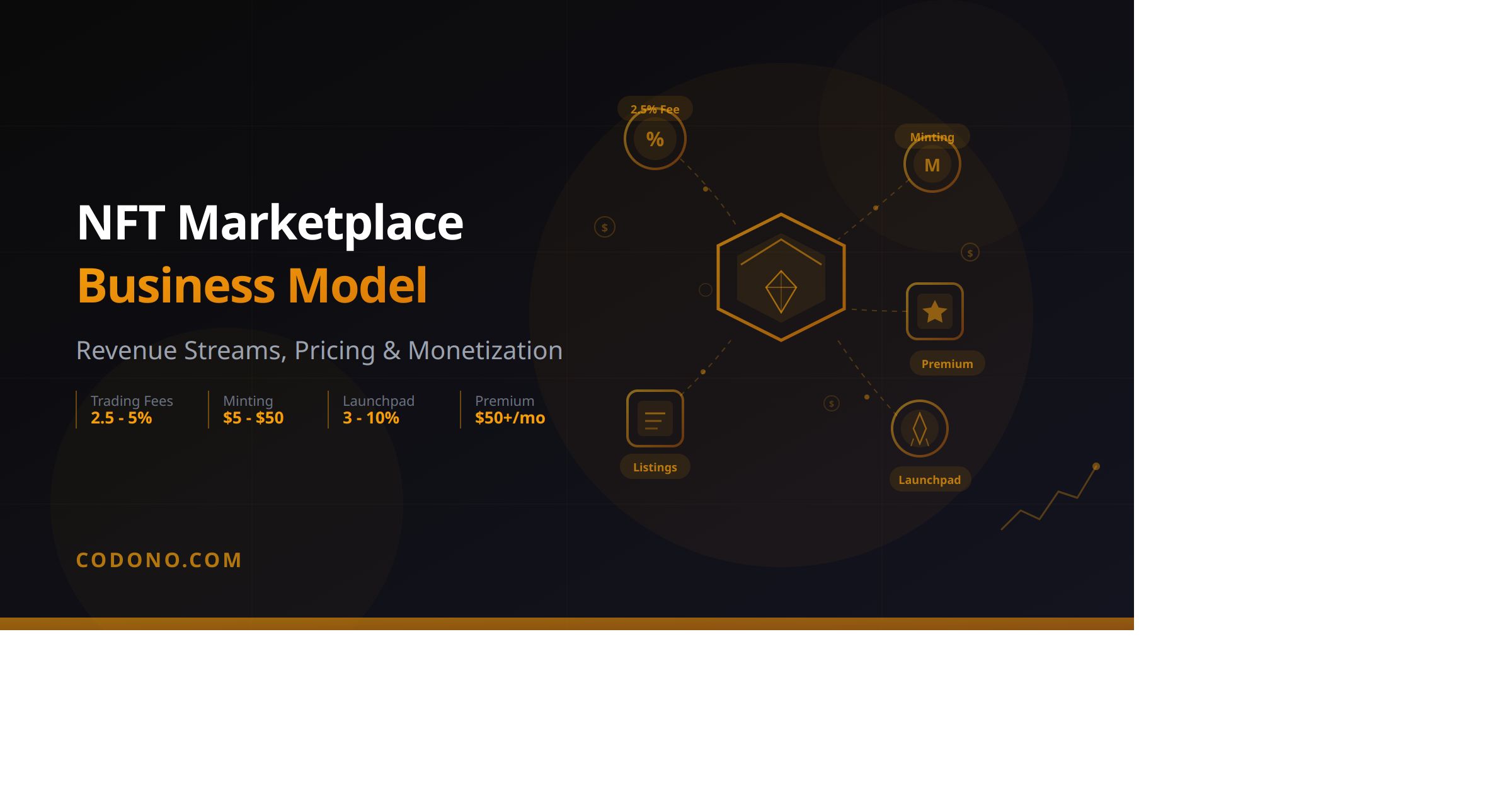
NFT Marketplace Business Model - Revenue Streams, Pricing & Monetization Strategy
Table of Contents
- The NFT Market Opportunity in 2026
- Primary Revenue Model: Commission-Based Trading Fees
- Minting Fees: Monetizing the Creation Layer
- Listing Fees and Premium Placements
- Launchpad Services: High-Margin Revenue from NFT Drops
- Secondary Revenue Streams: Staking, Advertising, and Data
- Revenue Model Comparison: Fee Types and Typical Ranges
- Pricing Strategy: How to Set Fees Without Killing Growth
- Cost Structure Analysis: What It Actually Takes to Run a Marketplace
- Profitability Timeline: When Does an NFT Marketplace Break Even?
- Competitive Differentiation: Finding Your Niche
- Technology Infrastructure and Scaling Costs
The NFT Market Opportunity in 2026
The NFT marketplace landscape has matured significantly since the speculative frenzy of 2021-2022. What’s emerged is something far more durable — a market built on real utility, enforceable royalties, and diverse asset classes that extend well beyond profile picture collections. For operators considering whether to build an NFT marketplace, the question is no longer “is there a market?” but “which segment of the market offers the best business model for sustainable revenue?”
Global NFT trading volume has stabilized and is showing healthy growth patterns across gaming assets, digital art, real-world asset tokenization, and music rights. The platforms that survived the correction were the ones with actual business models — not the ones that were simply riding volume and hoping fees would cover their burn rate.
The opportunity for new entrants is significant, but it requires a clear understanding of where revenue comes from, how costs scale, and what differentiates a sustainable marketplace from one that burns through funding. If you’ve already explored the crypto exchange revenue model landscape, you’ll recognize many of the same principles at work here — but NFT marketplaces have unique monetization layers that traditional trading platforms don’t.
The most important lesson from the past three years: the NFT marketplace business model that works isn’t the one with the lowest fees. It’s the one that captures value at multiple points in the NFT lifecycle — creation, listing, discovery, sale, resale, and utility. Each of those touchpoints represents a revenue opportunity. The platforms that build for all of them are the ones generating real margin.
What follows is a complete breakdown of every revenue stream available to an NFT marketplace operator, with real numbers, honest cost analysis, and a framework for building a business model that actually generates profit.
Primary Revenue Model: Commission-Based Trading Fees
The foundation of every NFT marketplace business model is the trading commission — the percentage you take from each completed sale. This is the most straightforward revenue stream and typically accounts for 50-70% of total marketplace revenue.
How commission-based fees work:
When a seller lists an NFT and a buyer purchases it, the marketplace takes a percentage of the sale price. OpenSea standardized the 2.5% commission model, and most marketplaces operate somewhere between 1% and 5%. The fee is usually deducted from the seller’s proceeds, meaning the buyer pays the listed price and the seller receives the listed price minus the commission.
Why this model dominates:
Commission fees align the marketplace’s interests with those of its users. You only make money when your users successfully transact. This creates a strong incentive to build tools that help sellers price correctly, help buyers discover what they want, and reduce friction in the transaction process. Unlike subscription models, there’s no upfront cost that deters new users from joining the platform.
The numbers in practice:
Consider a marketplace processing $500,000 in monthly sales volume at a 2.5% commission rate. That’s $12,500 in monthly commission revenue. At $2 million monthly volume, you’re generating $50,000. At $10 million — which is achievable for a well-positioned niche marketplace — you’re looking at $250,000 per month from commissions alone.
These numbers scale linearly with volume, which is both the strength and the weakness of the model. When volume grows, revenue grows proportionally. But when market sentiment dips and trading slows down, so does your revenue. That’s why the most resilient NFT marketplace operators don’t rely solely on commissions. They layer additional revenue streams on top.
Creator royalties and marketplace fees:
One important distinction: marketplace commissions are separate from creator royalties. When a creator mints an NFT, they can set a royalty percentage (typically 5-10%) that gets paid to them on every secondary sale. The marketplace commission is charged on top of or alongside the creator royalty. Some platforms enforce royalties at the smart contract level, others make them optional. Your position on royalty enforcement is both a business decision and a competitive positioning decision.
A well-built NFT marketplace platform should give you full control over your commission structure — the ability to set different rates for primary vs. secondary sales, adjust fees by collection or category, and offer volume-based discounts to high-value traders.
Minting Fees: Monetizing the Creation Layer
Minting fees are charged when creators turn their digital assets into NFTs on your platform. This revenue stream is distinct from trading commissions because it captures value at the moment of creation, before any sale occurs.
Types of minting fee structures:
- Fixed fee per NFT: Charge a flat rate ($5-$50) each time a creator mints an NFT. Simple to understand, predictable revenue.
- Gas fee markup: Cover the blockchain gas cost and add a margin. On low-cost chains like Polygon or Solana, the gas cost might be $0.01 but you charge $1-$5 for the convenience of one-click minting.
- Lazy minting with deferred fees: The NFT isn’t actually minted on-chain until the first purchase. The minting cost is bundled into the sale price. This lowers the barrier for creators but delays your fee collection.
- Collection deployment fees: Charge a larger one-time fee ($50-$500) for deploying a full smart contract collection, then lower or zero fees for minting individual tokens within that collection.
Why minting fees matter for your business model:
Minting fees provide revenue that’s independent of trading volume. Even in a market downturn where secondary sales slow down, creators continue minting new NFTs — especially in gaming, music, and utility-focused categories where the NFT serves a function beyond speculation.
A marketplace that processes 1,000 mints per month at an average fee of $10 generates $10,000 monthly from minting alone. For platforms focused on gaming assets or generative art where minting volumes are high, this can be a substantial revenue stream.
The free minting trap:
Some marketplaces offer free minting to attract creators. This works as a customer acquisition strategy but has limits. Platforms that offer completely free minting need significantly higher trading volumes to compensate for the lost minting revenue. The compromise is to offer free or discounted minting for the first collection (to reduce onboarding friction) and then charge standard rates for subsequent collections.
Codono’s NFT marketplace software supports configurable minting fee structures, allowing you to set fixed fees, percentage-based fees, or collection-level pricing from the admin dashboard.
Listing Fees and Premium Placements
Listing fees and premium placement options represent a significant revenue stream that many new marketplace operators underestimate. Unlike commissions that depend on completed sales, listing fees generate revenue from activity — even if the listed NFT never sells.
Standard listing fees:
Basic listing fees range from free (to encourage supply) to $1-$10 per listing. The strategy most marketplaces use is to offer a certain number of free listings per month and charge for listings beyond that threshold. This keeps the marketplace accessible to casual creators while generating revenue from high-volume sellers.
Premium placement tiers:
This is where the real listing revenue lives. Premium placements give sellers enhanced visibility in exchange for higher fees:
- Featured listings: $10-$50 per listing to appear in “Featured” or “Trending” sections on the homepage. These spots are often sold on a time-limited basis (24-hour, 48-hour, or weekly features).
- Category spotlights: $25-$100 to be the top result in a specific category (Art, Gaming, Music, etc.) for a defined period.
- Collection promotion: $100-$500 for a collection-level promotion that highlights an entire collection rather than individual NFTs.
- Banner advertising: $200-$2,000 for banner placements on high-traffic pages. This is essentially advertising inventory, and it’s priced based on impressions.
Premium seller subscriptions:
Some marketplaces offer monthly subscription tiers that bundle listing benefits:
| Tier | Monthly Price | Benefits |
|---|---|---|
| Free | $0 | 10 listings/month, standard placement |
| Creator | $29/month | Unlimited listings, profile badge, analytics |
| Pro | $99/month | Everything in Creator + 5 featured spots, priority support |
| Enterprise | $299/month | Everything in Pro + dedicated account manager, API access, custom storefront |
This subscription model provides predictable recurring revenue that smooths out the volatility of commission-based income. Even a small marketplace with 200 paying subscribers at an average of $50/month generates $10,000 in predictable monthly revenue.
The key is building the analytics and discovery tools that make premium placements worth paying for. If your featured listing spots don’t actually drive more views and sales, creators will stop paying for them. Track and display the performance data — views, clicks, sales conversion — so creators can see the ROI of their premium spend.
Launchpad Services: High-Margin Revenue from NFT Drops
NFT launchpad services represent one of the highest-margin revenue streams available to marketplace operators. When a creator or project wants to launch a new collection, the marketplace provides launch infrastructure, marketing support, and access to an existing buyer audience in exchange for a significant fee.
How launchpad revenue works:
The standard launchpad fee structure is a percentage of total funds raised during the mint event, typically 3-10%. For a collection that sells 10,000 NFTs at 0.1 ETH each ($200), the total raise is $2,000,000. At a 5% launchpad fee, that’s $100,000 in revenue from a single launch event.
Even smaller launches generate meaningful revenue. A collection of 1,000 NFTs at $50 each raises $50,000. At 5%, your take is $2,500. If you support four to six launches per month at this scale, launchpad fees alone generate $10,000-$15,000 monthly.
What launchpad services include:
- Smart contract deployment and auditing: You deploy the mint contract, configure allowlists, set pricing tiers, and ensure the contract is secure.
- Minting page and UI: A dedicated mint page with countdown timers, supply trackers, and wallet connection.
- Allowlist management: Tools for creators to build and manage their allowlists, including integration with Discord and Twitter verification.
- Anti-bot protection: Rate limiting, CAPTCHA, and wallet verification to prevent bots from scooping the mint.
- Post-launch secondary market: Immediate listing on your marketplace for secondary trading after the mint.
If you’re already operating a crypto exchange, adding a launchpad is a natural extension. The infrastructure overlaps significantly with launchpad software used for token sales (IEOs and IDOs), and your existing user base provides a ready audience for NFT launches. Many exchange operators find that their tokenomics strategy can be extended to include NFT launch participation as a utility for their native token.
Curation is critical:
The difference between a high-revenue launchpad and a low-revenue one is curation. Platforms that launch every project that applies dilute their brand and erode buyer trust. Platforms that curate carefully — reviewing the team, the art quality, the roadmap, and the community — build a reputation that attracts better projects willing to pay higher fees. The best launchpads reject 90% of applications.
Secondary Revenue Streams: Staking, Advertising, and Data
Beyond the four primary revenue streams (commissions, minting, listings, and launchpad), successful NFT marketplace operators build secondary revenue streams that compound over time. These individually might not be massive, but together they can account for 15-25% of total revenue.
NFT staking and yield features:
NFT staking allows holders to lock their NFTs in exchange for rewards — typically in the marketplace’s native token, a partner token, or governance rights. The marketplace generates revenue from staking through:
- A percentage of staking rewards (if rewards are funded by external partners)
- Reduced selling pressure on the marketplace (staked NFTs can’t be listed, which supports floor prices)
- Increased user engagement and retention
Integrating staking requires smart contract infrastructure and token management, which is where a staking platform becomes essential. The upfront cost is significant, but staking features dramatically increase user retention and platform loyalty.
Advertising and sponsored content:
As your marketplace grows, its traffic becomes valuable advertising inventory:
- Sponsored collections: Projects pay to have their collection highlighted in search results and category pages.
- Banner ads: Display advertising on high-traffic pages. A marketplace with 100,000 monthly visitors can charge $5-$15 CPM (cost per thousand impressions), generating $500-$1,500 per banner per month.
- Newsletter sponsorship: If you build an email list (and you should), sponsored slots in your weekly newsletter can command $200-$1,000 per send, depending on list size and engagement.
Data and analytics services:
Your marketplace generates valuable market data: price histories, volume trends, collection rankings, wallet activity patterns. This data can be monetized:
- Premium analytics dashboards: Charge traders and collectors $20-$50/month for advanced market data.
- API access for developers: Offer paid API tiers for developers building tools on top of your marketplace data.
- Market reports: Publish monthly or quarterly market reports with premium insights available to institutional subscribers.
These secondary streams take time to develop but become increasingly valuable as your marketplace scales. The operators who plan for them from day one build the data collection and analytics infrastructure that makes them possible later.
Revenue Model Comparison: Fee Types and Typical Ranges
Understanding how different fee types compare in terms of revenue potential, implementation complexity, and impact on user experience is critical for designing your business model. Here’s a complete breakdown:
| Revenue Stream | Typical Range | Revenue Predictability | Implementation Complexity | User Friction |
|---|---|---|---|---|
| Trading commission | 1-5% per sale | Medium (volume-dependent) | Low | Low |
| Minting fees | $5-$50 per NFT | Medium-High | Low | Medium |
| Listing fees | Free-$10 per listing | High | Low | Low-Medium |
| Premium placements | $10-$500 per placement | High (subscription-based) | Medium | Low |
| Launchpad fees | 3-10% of funds raised | Low (event-dependent) | High | Low |
| NFT staking fees | 1-3% of rewards | Medium | High | Low |
| Advertising | $5-$15 CPM | High | Medium | Low |
| API access | $50-$500/month | High | High | None |
| Creator subscriptions | $29-$299/month | High (recurring) | Medium | Medium |
| Data/analytics | $20-$50/month | High (recurring) | High | None |
The optimal mix:
No single revenue stream is sufficient. The most profitable NFT marketplaces combine three to five streams. A strong starting combination is:
- Trading commissions (2.5%) — your baseline
- Minting fees ($10-$25 per NFT) — creation-layer revenue
- Premium placements ($25-$100 per feature) — discovery revenue
- Launchpad fees (5%) — high-margin event revenue
As you scale, add staking, advertising, and data monetization. This layered approach mirrors what successful crypto exchanges do — they don’t rely on trading fees alone, and neither should your NFT marketplace.
Pricing Strategy: How to Set Fees Without Killing Growth
Getting your pricing right is more important than getting your product right, because you can iterate on product features but a reputation for being expensive is extremely hard to shake. The NFT marketplace pricing strategy requires balancing three competing goals: maximizing revenue per transaction, attracting enough volume to be viable, and staying competitive with established platforms.
Phase 1: Launch pricing (months 1-6)
During launch, your primary goal is building liquidity — getting enough NFTs listed and enough buyers browsing to create a functioning marketplace. Set your fees at or slightly below market rates:
- Trading commission: 2.0-2.5%
- Minting: Free for the first 10 NFTs, then $5-$10
- Listings: Free
- Premium placements: Offer free trials to build case studies showing ROI
Phase 2: Growth pricing (months 6-18)
Once you have consistent activity, introduce premium tiers and optimize your core fees:
- Trading commission: 2.5% (standard), with VIP tiers at 1.5-2.0% for high-volume traders
- Minting: $10-$25 depending on chain and collection size
- Listings: Introduce a freemium model (10 free, then $2-$5 each)
- Premium placements: Full pricing with performance data to justify costs
Phase 3: Mature pricing (18+ months)
With an established user base and brand, you have pricing power. Introduce higher-margin products:
- Volume-tiered commissions (higher rates for casual users, lower for whales)
- Enterprise launchpad packages ($5,000-$25,000 flat fee + percentage)
- Subscription tiers for creators and collectors
- API pricing for developers and integrators
The elasticity question:
NFT marketplace users are price-sensitive but not as price-sensitive as crypto traders. A crypto trader will switch platforms over a 0.05% fee difference because they trade frequently and in large amounts. An NFT collector who buys five items a month cares more about selection and discovery than about saving 0.5% on each purchase. This gives NFT marketplaces slightly more pricing power than spot exchanges — but don’t overreach. Data from multiple platforms shows that commission rates above 5% significantly reduce transaction volume.
Cost Structure Analysis: What It Actually Takes to Run a Marketplace
Understanding your costs is as important as understanding your revenue. Many marketplace operators focus exclusively on the revenue model and are surprised when their margins are thinner than expected. Here’s a realistic breakdown of what it costs to run an NFT marketplace.
Technology infrastructure costs:
| Cost Category | Monthly Range | Notes |
|---|---|---|
| Cloud hosting (AWS/GCP) | $500-$5,000 | Scales with traffic and storage |
| Blockchain node access | $200-$1,000 | Multiple chains require multiple nodes |
| IPFS/Arweave storage | $100-$500 | NFT metadata and media storage |
| CDN and media delivery | $200-$2,000 | Image/video serving for NFT previews |
| Smart contract audits | $500-$2,500 (amortized) | One-time cost spread monthly |
| SSL, domain, DNS | $20-$50 | Standard web infrastructure |
| Monitoring and security | $100-$500 | Uptime monitoring, DDoS protection |
For operators who choose a white-label crypto exchange solution with NFT marketplace capabilities, many of these infrastructure costs are bundled into the platform fee, significantly reducing the upfront investment.
Staffing costs (for a lean team):
- 2-3 developers: $15,000-$40,000/month (depending on location)
- 1 designer: $4,000-$8,000/month
- 1 community/marketing manager: $3,000-$6,000/month
- 1 operations/support person: $2,500-$5,000/month
- Legal and compliance (part-time/contractor): $2,000-$5,000/month
Total lean team cost: $26,500-$64,000/month.
Other operational costs:
- Marketing and user acquisition: $2,000-$20,000/month (highly variable)
- Payment processing for fiat on-ramps: 2-4% of fiat transaction volume
- Legal entity maintenance: $500-$2,000/month
- Insurance: $500-$2,000/month
Total monthly operating cost estimate:
For a lean startup marketplace: $30,000-$50,000/month For a mid-scale marketplace with moderate traffic: $60,000-$120,000/month For an established marketplace processing $5M+ monthly volume: $150,000-$300,000/month
These numbers are important because they define your breakeven point. If your monthly costs are $50,000 and your blended revenue rate is 3% of trading volume, you need approximately $1.7 million in monthly trading volume just to break even. That’s very achievable, but it won’t happen in month one. Plan your funding accordingly.
Profitability Timeline: When Does an NFT Marketplace Break Even?
The path to profitability for an NFT marketplace is not a straight line. It involves distinct phases with different cost and revenue profiles. Understanding this timeline helps you plan funding, set expectations, and make better decisions about when to invest in growth vs. when to optimize for margin.
Months 1-3: Build and launch phase
Revenue: $0-$5,000/month (early adopters, test transactions) Costs: $40,000-$80,000/month (development, launch marketing, infrastructure) Monthly burn: -$40,000 to -$80,000
This phase is pure investment. Your goal is to get the marketplace live, onboard initial creators, and start building a collection library. Focus on the security infrastructure and user experience rather than revenue optimization.
Months 4-8: Traction phase
Revenue: $5,000-$25,000/month (growing volume, minting fees kick in) Costs: $35,000-$60,000/month (reduced dev cost, steady operations) Monthly burn: -$15,000 to -$50,000
Trading volume is growing but not yet at breakeven levels. Minting fees and early premium placements start contributing. The key metric to track is month-over-month volume growth rate. If you’re growing 20%+ per month, you’re on a path to profitability. Below 10%, you need to reassess your acquisition strategy.
Months 9-15: Scaling phase
Revenue: $25,000-$100,000/month (diversified revenue streams) Costs: $50,000-$90,000/month (increased marketing spend to capitalize on traction) Monthly burn: -$25,000 to +$10,000 (approaching breakeven)
This is where the launchpad revenue and premium placements start making a material difference. If you’ve built a curated launchpad with two to three successful drops per month, launchpad fees alone might cover $15,000-$40,000 of your costs.
Months 16-24: Profitability phase
Revenue: $100,000-$500,000/month (established marketplace with multiple revenue streams) Costs: $80,000-$150,000/month (scaling infrastructure and team) Monthly profit: $20,000-$350,000
At this stage, the marketplace is self-sustaining. Margins of 20-40% are realistic for well-run marketplaces. The focus shifts from survival to optimization — improving conversion rates, increasing average order value, and expanding into adjacent revenue streams.
The realistic timeline: Plan for 12-18 months to reach breakeven and 18-24 months to reach meaningful profitability. Marketplaces that try to rush this timeline by underinvesting in product or overspending on marketing tend to burn out. Patient, methodical growth with a focus on community and creator relationships beats fast-and-loose spending every time.
Cost vs. Revenue Projection (Monthly):
| Month | Trading Volume | Commission Revenue | Minting Revenue | Other Revenue | Total Revenue | Operating Costs | Net P/L |
|---|---|---|---|---|---|---|---|
| 3 | $100K | $2,500 | $1,000 | $500 | $4,000 | $45,000 | -$41,000 |
| 6 | $400K | $10,000 | $3,500 | $2,000 | $15,500 | $50,000 | -$34,500 |
| 9 | $1M | $25,000 | $7,000 | $5,000 | $37,000 | $60,000 | -$23,000 |
| 12 | $2.5M | $62,500 | $12,000 | $15,000 | $89,500 | $75,000 | +$14,500 |
| 18 | $5M | $125,000 | $20,000 | $35,000 | $180,000 | $100,000 | +$80,000 |
| 24 | $10M | $250,000 | $35,000 | $60,000 | $345,000 | $130,000 | +$215,000 |
These projections assume a 2.5% trading commission, steady growth in minting volume, and gradual introduction of premium services. Your actual numbers will vary based on niche, region, and market conditions — but the growth trajectory is representative of well-executed marketplace launches.
Competitive Differentiation: Finding Your Niche
Competing head-to-head with OpenSea, Blur, or Magic Eden on general NFT trading is a losing strategy for a new marketplace. These platforms have network effects, brand recognition, and liquidity advantages that are extremely difficult to overcome with a “same thing, lower fees” approach. The successful new entrants find a niche where they can be the dominant player rather than a marginal competitor in the general market.
Niche strategies that work:
1. Vertical specialization
Focus on a specific NFT category and build the best possible experience for it:
- Gaming NFTs: Build deep integration with game studios, support in-game asset standards, offer gaming-specific features like asset rental and lending.
- Music NFTs: Partner with artists and labels, support audio playback, integrate streaming royalty tracking.
- Art NFTs: Curate carefully, offer exhibition features, support high-resolution media, build relationships with galleries.
- Real estate NFTs: Compliance-first approach, legal framework integration, property verification.
2. Geographic focus
Many regions are underserved by the major platforms:
- Middle East and North Africa: Arabic-language interface, regional payment methods, Sharia-compliant structures.
- Southeast Asia: Local language support, mobile-first design, integration with regional wallets and payment systems.
- Latin America: Spanish and Portuguese interfaces, fiat on-ramps for local currencies, partnerships with regional creators.
3. Technology differentiation
Build features that the major platforms don’t offer:
- Multi-chain aggregation: List and trade NFTs across multiple blockchains from a single interface.
- Fractional ownership: Allow high-value NFTs to be split into fractions, making expensive assets accessible to smaller collectors.
- AI-powered discovery: Use machine learning to recommend NFTs based on collector behavior and preferences.
- Social trading features: Follow top collectors, see trending purchases in real-time, community curation.
4. Creator-first features
Win by making creators love your platform:
- Better royalty enforcement: On-chain royalty enforcement that creators can trust.
- Creator analytics: Detailed dashboards showing views, favorites, offers, and buyer demographics.
- Collaboration tools: Enable multiple creators to collaborate on collections and split proceeds.
- Flexible pricing tools: Dutch auctions, English auctions, make-offer, bundle pricing, and timed sales.
The niche you choose determines your entire business model. A gaming NFT marketplace will have higher volume but lower average sale prices. An art NFT marketplace will have lower volume but higher margins. A real estate NFT marketplace will have the lowest volume but the highest revenue per transaction. Choose based on your team’s expertise, network, and the market gap you can most credibly fill.
For operators already running a crypto exchange, adding an NFT marketplace creates natural cross-selling opportunities. Your existing user base already has funded wallets and trading experience. You can also leverage your exchange’s crypto wallet infrastructure for NFT custody and management.
Technology Infrastructure and Scaling Costs
The technology decisions you make at the outset will determine your cost structure for years. The two fundamental choices are: build custom from scratch or deploy on proven marketplace software. Each has different cost implications and tradeoffs.
Build vs. buy comparison:
Building a custom NFT marketplace from scratch requires:
- 6-12 months of development time
- A team of 4-8 specialized engineers (Solidity, backend, frontend, DevOps)
- $200,000-$600,000 in upfront development costs
- Ongoing maintenance of $15,000-$40,000/month
- Smart contract audit costs of $10,000-$50,000 per audit cycle
Deploying on existing marketplace software:
- 2-8 weeks to launch
- 1-2 developers for customization
- $5,000-$50,000 in setup and licensing
- Ongoing costs of $2,000-$10,000/month for hosting and maintenance
- Security and smart contract audits typically included
For most operators, especially those entering the market for the first time, the buy approach is dramatically more cost-effective. You can always migrate to custom infrastructure later once you’ve validated your business model and have the revenue to justify the investment. For a detailed side-by-side comparison of costs, timelines, and feature parity, see our white-label NFT platform vs custom build analysis. Check out Codono’s pricing to see how a pre-built solution compares to the custom development path.
Blockchain infrastructure costs:
Your choice of blockchain(s) directly impacts both your cost structure and user experience:
- Ethereum: Highest brand recognition and collector trust, but gas fees of $2-$50 per transaction make small-value NFTs uneconomical. Best for high-value art and collectibles.
- Polygon: Near-zero gas fees, Ethereum security via checkpoints, large gaming NFT ecosystem. Great for high-volume, lower-value NFTs.
- Solana: Very low fees, fast finality, strong NFT ecosystem. Attracts a different demographic than Ethereum.
- BNB Chain: Low fees, large user base, strong in Asian markets.
- Multi-chain: Supporting multiple chains increases infrastructure costs by 30-50% but dramatically expands your addressable market.
Scaling considerations:
As your marketplace grows, certain costs scale linearly while others scale sublinearly:
- Linear scaling: Storage costs (more NFTs = more media to store), bandwidth (more users = more data served), blockchain transaction costs (more mints = more on-chain activity).
- Sublinear scaling: Core infrastructure (servers handle more traffic before needing upgrades), smart contract costs (deploying new versions is a fixed cost regardless of users), team costs (a team of 10 can support 100x more users than a team of 5, not just 2x).
The sweet spot for a startup marketplace is to keep infrastructure costs under 15-20% of revenue. If you’re spending more than 20% of revenue on infrastructure, your architecture is either over-engineered or under-optimized.
If you want to see how a production-ready NFT marketplace works before committing to development, request a demo to explore the admin tools, minting workflows, and fee configuration options firsthand.
Building a Sustainable NFT Marketplace Business
The NFT marketplace business model is proven. The platforms that survived the 2022-2023 correction did so by building diversified revenue streams, controlling costs, and focusing on specific market segments where they could win. The operators who failed were typically the ones who raised too much money, hired too fast, and assumed that volume growth would solve all their problems.
The framework for building a sustainable NFT marketplace business comes down to five principles:
1. Diversify revenue from day one. Don’t launch with just trading commissions. Include minting fees, listing fees, and at least one premium service from the start. Even if the premium service generates minimal revenue initially, it establishes the pricing model and trains users to expect paid features.
2. Control your cost base. Use existing marketplace software rather than building custom unless you have a very specific technical requirement that no existing solution meets. Keep your team lean until revenue justifies expansion. Avoid the trap of hiring for the marketplace you want to be rather than the marketplace you are.
3. Choose a niche and dominate it. The general NFT marketplace is dominated by well-funded incumbents. Find a vertical, geographic, or feature-based niche where you can be the best option and build from there.
4. Focus on creator relationships. Creators are the supply side of your marketplace. Without great creators, you don’t have great NFTs, and without great NFTs, you don’t have buyers. Invest in creator tools, creator support, and creator marketing. The marketplaces with the strongest creator relationships win.
5. Plan for a 12-18 month path to breakeven. If your business model requires more than 18 months to reach breakeven, either your costs are too high or your revenue model is too thin. Reassess before you run out of runway.
The NFT marketplace is not a get-rich-quick business. It’s a financial infrastructure business that compounds over time. The operators who think in terms of building long-term value — not just capturing short-term fees — are the ones who will be around in five years.
Whether you’re starting from scratch or adding NFT capabilities to an existing crypto exchange platform, the business model principles remain the same: capture value at every point in the NFT lifecycle, keep your costs proportional to your revenue stage, and build for a specific market segment rather than trying to be everything to everyone.
Ready to explore the technical and business side of launching your marketplace? Our complete guide to building an NFT marketplace covers the architecture, smart contracts, and launch checklist in detail. Start with a live demo to see how the infrastructure works, or review the full pricing breakdown to model your own cost and revenue projections.
Codono Team
Codono builds enterprise-grade crypto exchange software deployed by 250+ operators across 30+ countries. Our team writes from production experience running spot, derivatives, custody, and compliance at scale.
View all posts by Codono Team →