 Borsa Yazılımı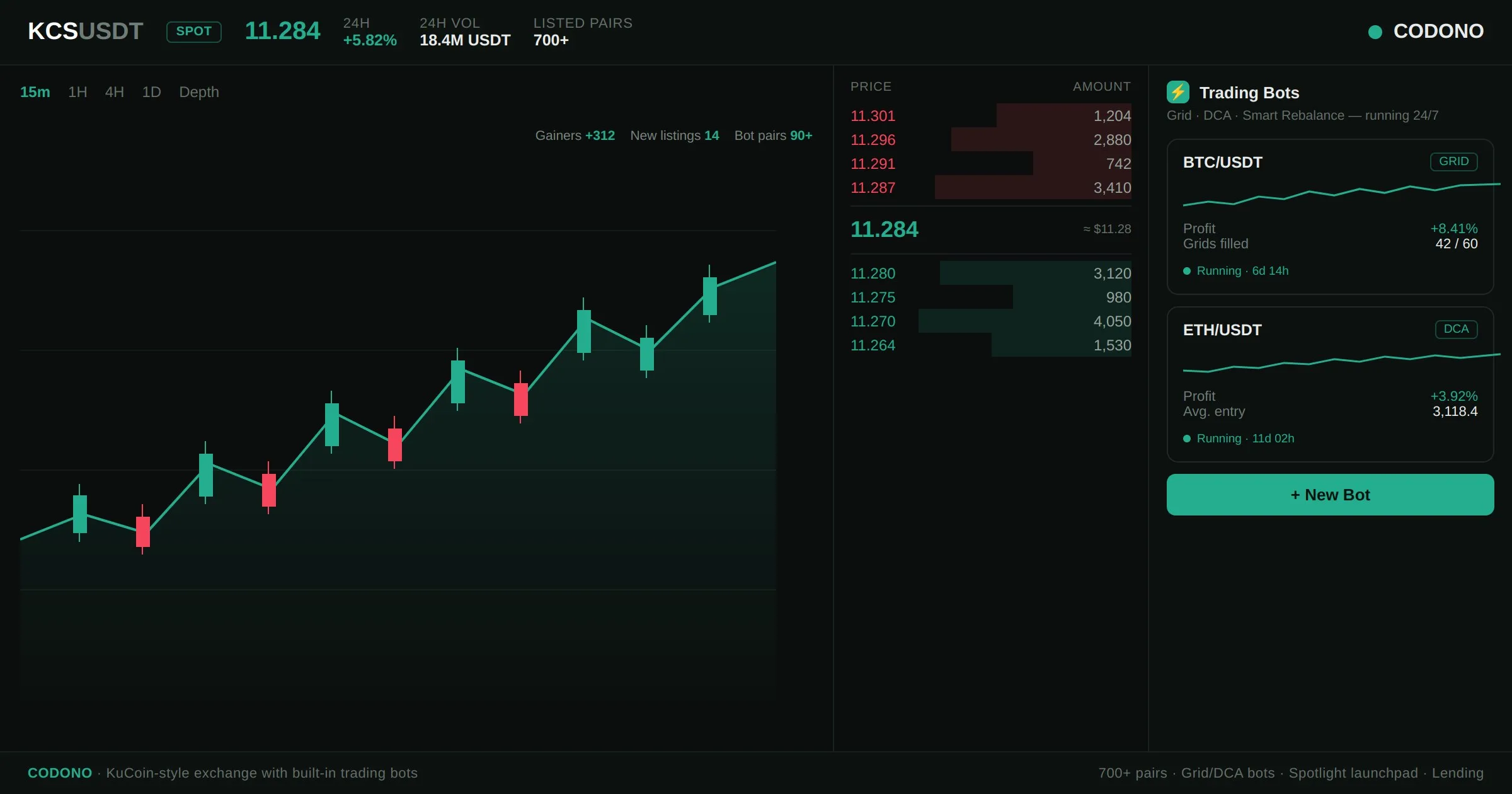
Bir KuCoin klonu alternatifi arıyorsanız, muhtemelen çoğu “klon script”in yüzlerce altcoin ve yerleşik trading botu reklamı yaptığını — ardından gerçek otomasyon veya kaynak kodu olmayan yeniden markalanmış kabuklar çıktığını fark etmişsinizdir. Bu sayfa Codono ’yu kaynak koduna sahip, tek seferlik bir alternatif olarak tipik KuCoin klon scriptleri ile karşılaştırır ve düşük maliyetli bir klonun ne zaman doğru tercih olduğu konusunda dürüst olur.
KuCoin Klon Scripti Nedir?
Bir KuCoin klon scripti, KuCoin’e “Halkın Borsası” lakabını kazandıran altcoin ve otomasyon deneyimini çoğaltmak için hazırlanmış borsa yazılımıdır: derin ve hızlı hareket eden bir altcoin kataloğu, yerleşik grid ve DCA trading botları , Spotlight tarzı bir launchpad ve lending / earn ürünleri.
KuCoin tarzı bir borsa olarak yapılandırıldığında Codono aynı altcoin borsası sonucunu sunar — kendi işletmenizin markası altında, tam kaynak kodu erişimiyle. Klon scripti etiketi modeli tanımlar, kaliteyi değil; önemli olan alttaki yazılımın gerçek trading botlarını çalıştırıp çalıştıramayacağı, tokenları hızlı listeleyip listeleyemeyeceği ve launchpad’i canlı bir işletme olarak işletip işletemeyeceğidir.
Operatörler Neden Bir KuCoin Klonu Alternatifi Arıyor?
Çoğu operatör klon scriptlerini fiyata göre karşılaştırmaya başlar, ardından aynı tekrarlayan sorunlarla karşılaşır:
- Gerçek kaynak kodu sahipliği yok. Birçok klon scripti şifrelenmiş, ionCube korumalı veya kara kutu dağıtım olarak teslim edilir. Bot mantığını denetleyemez, listeleme hattını genişletemez veya yığını kendi sunucunuzda barındıramazsınız — ve satıcının lisans sunucusuna kilitlenmiş olursunuz.
- Gerçek bot olmayan bir “botlar” sekmesi. Trading botları KuCoin’in imza özelliğidir; ancak genel klon scriptler sık sık sunucu tarafı stratejileri çalıştırmayan, emirleri gerçekleştirmeyen veya dürüst PnL göstermeyen bir arayüz sunar.
- Statik altcoin listesi. KuCoin listeleme hızında rekabet eder. Klon scriptleri “700+ coin” diye reklam yapabilir; ancak operatörlere yeni piyasaları güvenle ve hızla eklemek için araç vermez — bu da bütün stratejiyi bozar.
- Launchpad sadece bir landing page. Spotlight tarzı bir launchpad, anlık görüntü mekaniği, tahsis mantığı ve token kilitlenme kuralları gerektirir. Birçok klon script çalışan bir IEO motoru yerine bir pazarlama sayfası sunar.
- Gizli tekrarlayan maliyetler. Düşük başlık fiyatının ardından yıllık yenileme ücretleri, alan adı başına lisanslar, özellik açma ücretleri veya gelir payları gelebilir; bunlar platformu birkaç yıl içinde tek seferlik lisanstan daha pahalı hale getirir.
- Earn ürünleri için yeterli uyumluluk derinliği yok. Düzenleyiciler KYC/AML, saklama politikası ve lending ile staking getirilerinin nasıl kaynaklandığını ve açıklandığını inceler. Uyumluluğu bir onay kutusu olarak gören klon scriptler riski satıcıya değil, operatöre bırakır.
Gerçek bir KuCoin klonu alternatifi bu yapısal sorunları çözer: tam kaynak kodu, çalışan sunucu tarafı botları, hızlı listeleme hattı, gerçek bir launchpad, şeffaf tek seferlik fiyatlandırma ve uyumluluğa hazır earn ürünleri.
Tipik Klon Scripti ile Codono
| Boyut | Tipik KuCoin Klon Scripti | Codono |
|---|---|---|
| Kaynak kodu | Şifrelenmiş, kısmi veya hiç | Her lisans sahibine tam kod tabanı |
| Ticari model | Tekrarlayan lisans, alan adı başına veya gelir payı | Tek seferlik lisans + kendi barındırmanız |
| Altcoin listelemeleri | Statik katalog veya desteklenmez | 700+ coin ve çift, hızlı listeleme hattıyla |
| Trading botları | Sıklıkla yalnızca arayüz veya eksik | Sunucu tarafı grid, DCA ve akıllı yeniden dengeleme botları |
| Launchpad | Landing page veya eksik | Spotlight tarzı anlık görüntü, piyango ve abonelik tahsisi |
| Lending / Earn | Sıklıkla eksik veya ek ücretli | Esnek ve kilitli staking, birikim ve lending piyasaları |
| Yerel token indirimleri | Nadiren yapılandırılabilir | Yapılandırılabilir KCS tarzı ücret indirimleri |
| Spot trading | Temel | Fiyat-zaman öncelikli spot trading motoru |
| Mobil uygulamalar | Genellikle jenerik veya dahil değil | Bot yönetimiyle yerel iOS ve Android |
| Uyumluluk duruşu | Pazarlama onay kutusu | VASP / MSB lisanslama incelemesi için tasarlandı |
| Uzun vadeli maliyet | Ücretlerle birikir | Öngörülebilir tek seferlik maliyet |
Fark yalnızca özelliklerde değil — platformun gerçek bir altcoin ve otomasyon borsasını işletip işletemeyeceğinde ve kiralanmış bir kabuk yerine sahiplenilen bir varlık haline gelip gelemeyeceğindedir.
Codono Neler Ekliyor?
Codono biraz daha iyi bir klon script değildir; KuCoin altcoin modeli için yapılandırılabilen kaynak koduna sahip bir borsa ürünüdür. Yukarıdaki tablonun ötesinde, farklar günlük operasyonlarda kendini gösterir:
- Gerçekten çalışan yerleşik trading botları. Grid botları, DCA botları ve akıllı yeniden dengeleme stratejileri, kullanıcının tarayıcısı açık olup olmadığından bağımsız olarak sunucu tarafında 7/24 çalışır. Operatörler hangi bot türlerinin etkin olduğunu kontrol eder ve premium stratejiler için ücret alabilir. Tam bot spesifikasyonu için KuCoin klon scripti sayfasına bakın.
- Hızlı altcoin listeleme hattı. Yönetici paneli piyasaları hızla eklemek için tasarlanmıştır — yeni bir coini, trading çiftlerini, ücret tarifesini ve yatırma/çekme parametrelerini mühendislik çalışması yapmadan yapılandırın. Listeleme hızı temel bir KuCoin stratejisidir ve platform bunu operasyonel olarak destekler.
- Çalışan Spotlight tarzı launchpad. Launchpad modülü , elde tutma dönemi anlık görüntüleri, piyango ve abonelik tahsis mekaniklerini destekler; böylece yerel tokeniniz bir listeleme volanını yürütürken siz launchpad ve listeleme ücretleri kazanırsınız.
- Lending ve earn ürünleri. Esnek ve kilitli staking, birikim tarzı getiri ve lending piyasaları kullanıcı fonlarını platformda tutar ve size ek bir gelir akışı sağlar — KuCoin Earn kalıbı, tam olarak uygulanmış.
- Yerel token ekonomisi. Kendi tokeninizi çıkarın ve elinde tutanlara kademeli trading ücreti indirimleri tanıyın; böylece elde tutma ve talebi yönlendiren KCS kalıbını yeniden oluşturursunuz.
- Gerçek kaynak sahipliği. Yığını siz barındırır, kodu değiştirir ve verileri siz kontrol edersiniz. Arızalanacak lisans sunucusu veya büyüyemeyeceğiniz bir satıcı yoktur.
- Şeffaf fiyatlandırma. Yayımlanan fiyatlandırma katmanlarında tekrarlayan platform ücreti yok — bu yapısal fark genellikle çok yıllı maliyette kazanır.
- Uyumluluğa hazır operasyonlar. Uyumluluk çerçevesi aracılığıyla katmanlı KYC/AML, işlem izleme, denetim kayıtları ve yargı bölgesi haritalaması.
Altcoin borsasını gerçek bir işletme olarak çalıştırmayı planlıyorsanız, bu eklemeler projeyi “başlaması mümkün demo”dan “listelemeler ve otomasyon konusunda rekabet edebilecek platform”a taşır.
Ucuz Bir Klon Scripti Ne Zaman Hala Uygun?
Her proje için Codono’nun doğru seçim olduğunu söylemek dürüst olmaz. Düşük maliyetli bir KuCoin klon scripti şu durumlarda doğru araç olabilir:
- Ticari olmayan bir demo veya MVP’ye ihtiyacınız varsa — tam bir lansman ve ödeme ortaklıklarına taahhüt vermeden önce yatırımcılara veya ortaklara göstermek için.
- Dahili bir prototip veya eğitim ortamı kuruyorsanız; canlı botlar, listeleme hızı ve kaynak kodu sahipliği önemli değilse.
- Minimal uyumluluk gereksinimlerine sahip bir yargı bölgesinde çalışıyorsunuz ve kullanıcılarınız gerçekte otomatik stratejiler kullanmıyorsa; bu nedenle bot arayüzü yalnızca dekoratiftir.
- Hız, uzun ömürlülükten daha önemliyse — örneğin kısa vadeli bir pazarlama deneyi veya tek seferlik bir etkinlik.
Bu durumlarda ucuz bir klon scripti makul bir tek kullanımlık başlangıç noktasıdır. Gerçek otomasyon, listeleme akışı ve earn ürünleri işleyen canlı bir altcoin borsası için kaynak koduna sahip bir platform daha güvenli uzun vadeli seçimdir.
Geçiş Yolu
Halihazırda genel bir KuCoin klon scripti üzerinde yayında olup sınırlarına geliyorsanız, Codono’ya geçiş standart bir mutabakat modelini izler:
- Veri ihracı — kullanıcılar, bakiyeler, açık bot stratejileri, sipariş geçmişi, launchpad tahsisleri ve KYC verileri eski sistemden alınır.
- Hazırlama ortamına aktarma — ihracı Codono hazırlama ortamına yükleyin ve veri bütünlüğünü doğrulayın.
- Pozisyon ve bakiye mutabakatı — kesmeden önce kullanıcı bakiyelerini, aktif bot emirlerini, bekleyen çekimleri ve devam eden yatırmaları mutabakat edin.
- Yapılandırma — markalama, altcoin piyasaları, bot türleri, launchpad kuralları, ücret tarifeleri ve ödeme yöntemlerini Codono ile eşleştirin.
- Kesme — kısa bakım penceresi, DNS geçişi ve lansman sonrası izleme.
Teknik geçiş basittir; planlama gereken şey düzenleyici sürekliliktir — lisanslarınızı, banka ilişkilerinizi ve uyumluluk programınızı geçerli tutmak. Mevcut klon scriptinizden geçiş kapsamını değerlendirmek için bize ulaşın .
Başlangıç
- Modelleri karşılaştırın — altcoin ve bot özellik setini görmek için tam KuCoin klon scripti sayfasını okuyun.
- Platformu keşfedin — trading botları, listeleme akışı ve launchpad için canlı demo ’yu deneyin.
- Şeffaf fiyatlandırmayı inceleyin — tam kaynak kodu erişimiyle yayımlanan fiyatlandırma katmanları.
- Uyumluluğu gözden geçirin — pazarınızın düzenleyici yolunu haritalamak için uyumluluk sayfasına bakın.
- Konuşun — yeni bir altcoin borsası veya mevcut bir klon scriptinden geçiş kapsamını değerlendirmek için bize ulaşın .
Tipik bir KuCoin klon scripti ile Codono arasındaki seçim sahipliğe indirgenir: bot arayüzlü yeniden markalanmış bir kabuk kiralamak mı, yoksa gerçek otomasyon, listeleme hızı ve büyüyebileceğiniz earn ürünleriyle kaynak koduna sahip bir altcoin borsası mı başlatmak.